Introduction
India’s Insolvency and Bankruptcy Code, 2016 (IBC) has transformed the insolvency framework by providing a time-bound and creditor-driven resolution process. Over the years, the Code has undergone several legislative amendments to address practical challenges, improve efficiency, and align with global insolvency standards.
The 2026 proposed amendments to the IBC represent another significant step in modernising India’s insolvency regime. Among the most anticipated reforms are the introduction of a comprehensive super-priority emergency financing and super-priority emergency financing provisions. These reforms are intended to strengthen India’s position as an investment-friendly jurisdiction while enabling distressed companies to access urgent liquidity and ensuring effective management of multinational insolvency proceedings.
This article examines these proposed reforms, their legal implications, potential benefits, and implementation challenges.
Understanding the Need for Reform
With globalisation, Indian companies increasingly own assets abroad, raise foreign investments, and operate through international subsidiaries. Similarly, foreign corporations have significant investments in India.
The existing IBC framework contains only Sections 234 and 235, which deal with bilateral cooperation with foreign jurisdictions. However, these provisions have rarely been used because they depend upon reciprocal agreements between India and other countries.
Consequently, insolvency proceedings involving multiple jurisdictions often become complex, resulting in:
- Conflicting court orders
- Delays in asset realisation
- Increased litigation costs
- Reduced value of distressed assets
- Uncertainty for international creditors
The proposed amendments aim to address these deficiencies through a structured cross-border insolvency regime.
Cross-Border Insolvency: The Proposed Framework
What is Cross-Border Insolvency?
Cross-border insolvency arises when:
- A debtor has assets located in more than one country;
- Creditors belong to multiple jurisdictions;
- Insolvency proceedings are initiated simultaneously in different countries; or
- The debtor conducts business internationally.
Without legal cooperation, multiple proceedings can lead to conflicting judgements and inefficient asset recovery.
Adoption of the UNCITRAL Model Law
The proposed reforms are expected to substantially incorporate principles of the UNCITRAL Model Law on Cross-Border Insolvency, which has already been adopted in jurisdictions such as:
- United States
- United Kingdom
- Singapore
- Australia
- South Africa
- Japan
The Model Law is based upon four core principles:
1. Access
Foreign insolvency representatives may directly approach Indian adjudicating authorities.
2. Recognition
Indian courts may recognise foreign insolvency proceedings as either
- Main Proceedings
- Non-Main Proceedings
Recognition enables coordination between courts.
3. Cooperation
Courts and insolvency professionals across jurisdictions are encouraged to cooperate by sharing information and coordinating proceedings.
4. Coordination
Simultaneous insolvency proceedings are managed efficiently to maximise value for creditors.
Centre of Main Interests (COMI)
One of the central concepts under the proposed framework is the Centre of Main Interests (COMI).
COMI determines where the principal insolvency proceedings should be conducted.
Factors considered include:
- Registered office
- Principal place of business
- Location of management
- Main assets
- Principal creditors
- Commercial operations
Determining COMI reduces jurisdictional conflicts and promotes legal certainty.
Benefits of Cross-Border Insolvency Framework
1. Better Recovery for Creditors
Coordinated proceedings prevent unnecessary litigation and maximise recovery.
2. Increased Foreign Investment
International investors prefer jurisdictions having predictable insolvency mechanisms.
A modern cross-border framework enhances investor confidence.
3. Faster Resolution
Cooperation between courts avoids duplication of proceedings.
4. Preservation of Asset Value
Businesses operating across countries can continue functioning during restructuring.
5. International Credibility
India aligns itself with globally accepted insolvency practices.
Challenges in Cross-Border Insolvency
Despite its advantages, several legal challenges remain.
Public Policy Exception
Indian courts may refuse recognition if foreign proceedings violate India’s public policy.
Protection of Domestic Creditors
Balancing foreign creditor rights with domestic stakeholder interests remains critical.
Judicial Coordination
Courts require standardised procedures for communication and cooperation.
Data Sharing
Cross-border proceedings involve confidential financial information requiring robust safeguards.
Regulatory Overlap
Coordination among RBI, SEBI, Competition Commission of India (CCI), tax authorities, and foreign regulators may present practical complexities.
Super-Priority Emergency Financing
Meaning
Financially distressed companies often require immediate funding to continue operations during insolvency proceedings.
Such financing is commonly known as the following:
- Interim Finance
- Rescue Finance
- Debtor-in-Possession (DIP) Financing
- Emergency Financing
The proposed amendments introduce the concept of Super-Priority Emergency Financing, granting lenders priority over most existing creditors for approved rescue financing.
Why Emergency Financing Is Necessary
Many companies entering insolvency suffer from severe liquidity shortages.
Without fresh capital:
- Salaries cannot be paid;
- Operations cease;
- Customers withdraw;
- Suppliers terminate contracts;
- Asset values decline rapidly.
Emergency financing allows the business to continue operating while a resolution plan is developed.
What is Super Priority?
Under ordinary insolvency principles, creditors are paid according to statutory priority.
The proposed reforms may elevate approved emergency financing above many existing claims, subject to judicial oversight and statutory safeguards.
This incentivises lenders to provide critical funding during insolvency.
Advantages of Super-Priority Financing
Business Continuity
Essential operations continue during resolution.
Value Maximisation
A functioning business generally commands higher value than a liquidated entity.
Employment Protection
Employees retain jobs while restructuring continues.
Improved Resolution Outcomes
Resolution applicants receive financially stable businesses.
Higher Creditor Recoveries
Maintaining operations often increases overall recoveries.
Safeguards Against Misuse
Granting priority to new lenders must be balanced with protections for existing stakeholders.
Expected safeguards include:
- Approval by the Adjudicating Authority (NCLT)
- Transparent disclosure of financing terms
- Demonstration that financing is necessary
- Protection against fraudulent transactions
- Oversight by the Resolution Professional and Committee of Creditors (CoC)
These safeguards help ensure that emergency financing serves the interests of all stakeholders.
International Perspective
Several jurisdictions have successfully implemented similar mechanisms.
United States
Chapter 11 of the U.S. Bankruptcy Code permits Debtor-in-Possession (DIP) financing with court approval.
Singapore
Singapore’s insolvency regime provides super-priority rescue financing, making it a preferred restructuring hub in Asia.
United Kingdom
UK restructuring laws facilitate rescue funding through flexible restructuring mechanisms.
India’s proposed reforms draw from these international practices while adapting them to the domestic legal framework.
Potential Challenges
Although beneficial, implementation may face practical concerns:
- Existing secured creditors may oppose dilution of priority.
- Banks may remain cautious in funding distressed entities.
- Judicial delays could reduce the effectiveness of emergency financing.
- Valuation disputes may arise concerning security interests.
- Clear regulatory guidelines will be essential for consistent implementation.
Impact on Stakeholders
Corporate Debtors
- Increased chances of successful restructuring.
- Access to essential working capital.
Financial Creditors
- Improved recoveries through business continuity.
- Greater certainty in multinational insolvency cases.
Operational Creditors
- Enhanced prospects of payment through successful resolutions.
Foreign Investors
- Increased confidence in India’s insolvency framework.
- Improved legal certainty for cross-border investments.
Insolvency Professionals
- Expanded responsibilities involving international coordination and financing oversight.
Legal Significance
The proposed 2026 amendments reflect India’s evolving insolvency jurisprudence by incorporating internationally accepted principles while addressing domestic commercial realities. A structured cross-border insolvency framework can facilitate cooperation with foreign courts and insolvency representatives, whereas super-priority emergency financing has the potential to preserve enterprise value by enabling viable businesses to continue operations during the resolution process.
The effectiveness of these reforms, however, will depend on the precise legislative language enacted, judicial interpretation, institutional preparedness, and the development of clear procedural guidelines for insolvency professionals and adjudicating authorities.
Conclusion
The proposed 2026 IBC amendments mark an important step toward modernising India’s insolvency ecosystem. By strengthening cross-border cooperation and facilitating access to emergency funding, the reforms seek to make insolvency proceedings more efficient, transparent, and commercially viable.
If implemented with adequate safeguards, these measures can significantly improve resolution outcomes, enhance creditor confidence, attract foreign investment, and reinforce India’s standing as a reliable jurisdiction for international business. At the same time, careful implementation and judicial oversight will be essential to balance the interests of debtors, creditors, investors, and the broader economy.
As India’s insolvency framework continues to evolve, these proposed reforms have the potential to align the country’s restructuring regime more closely with global best practices while promoting sustainable economic growth and business resilience.
The proposed 2026 IBC Amendments introduce reforms such as Cross-Border Insolvency and Super-Priority Emergency Financing to strengthen India’s insolvency framework.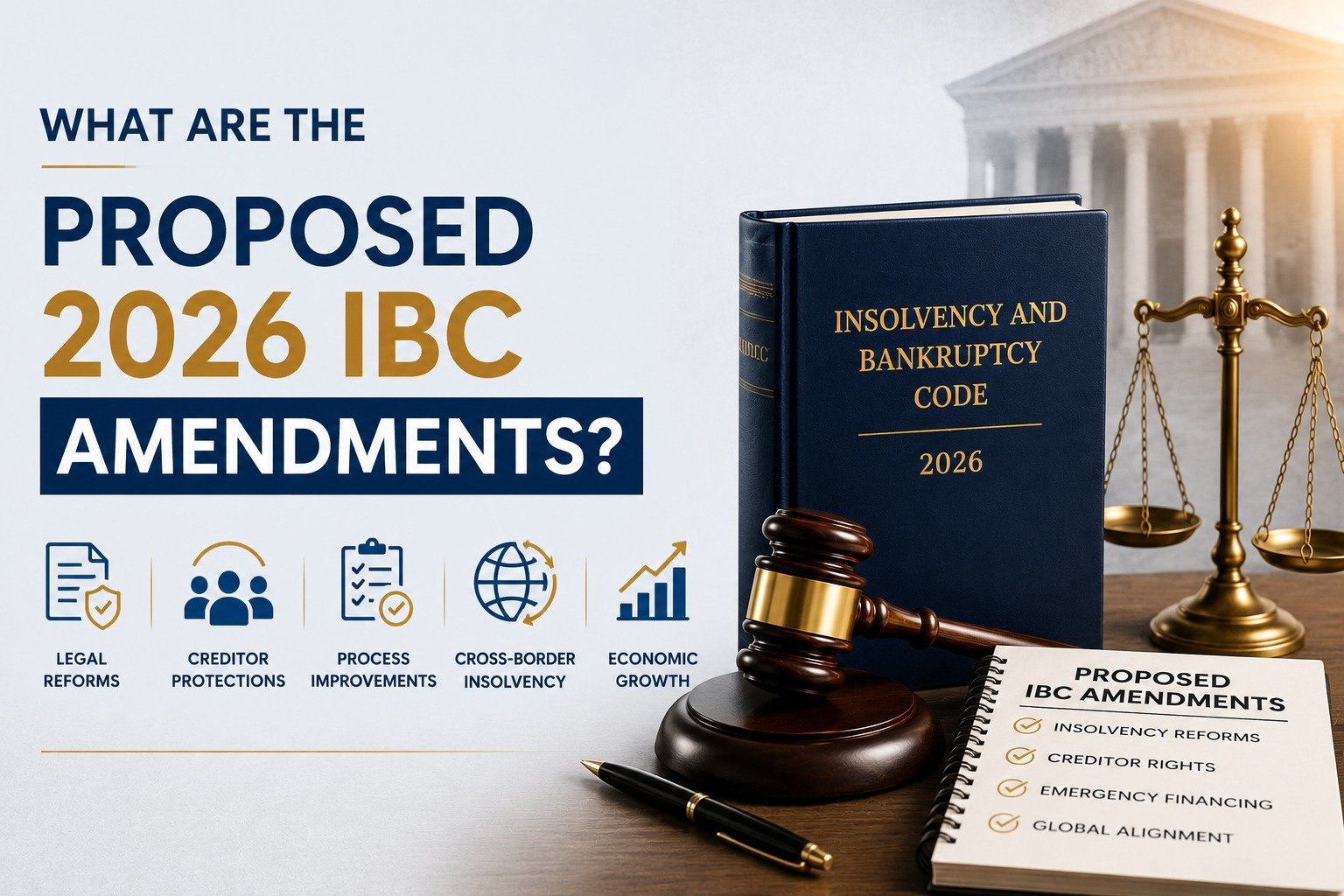
Cross-border insolvency applies when a debtor has assets, creditors, or business operations in more than one country, requiring cooperation between different legal jurisdictions.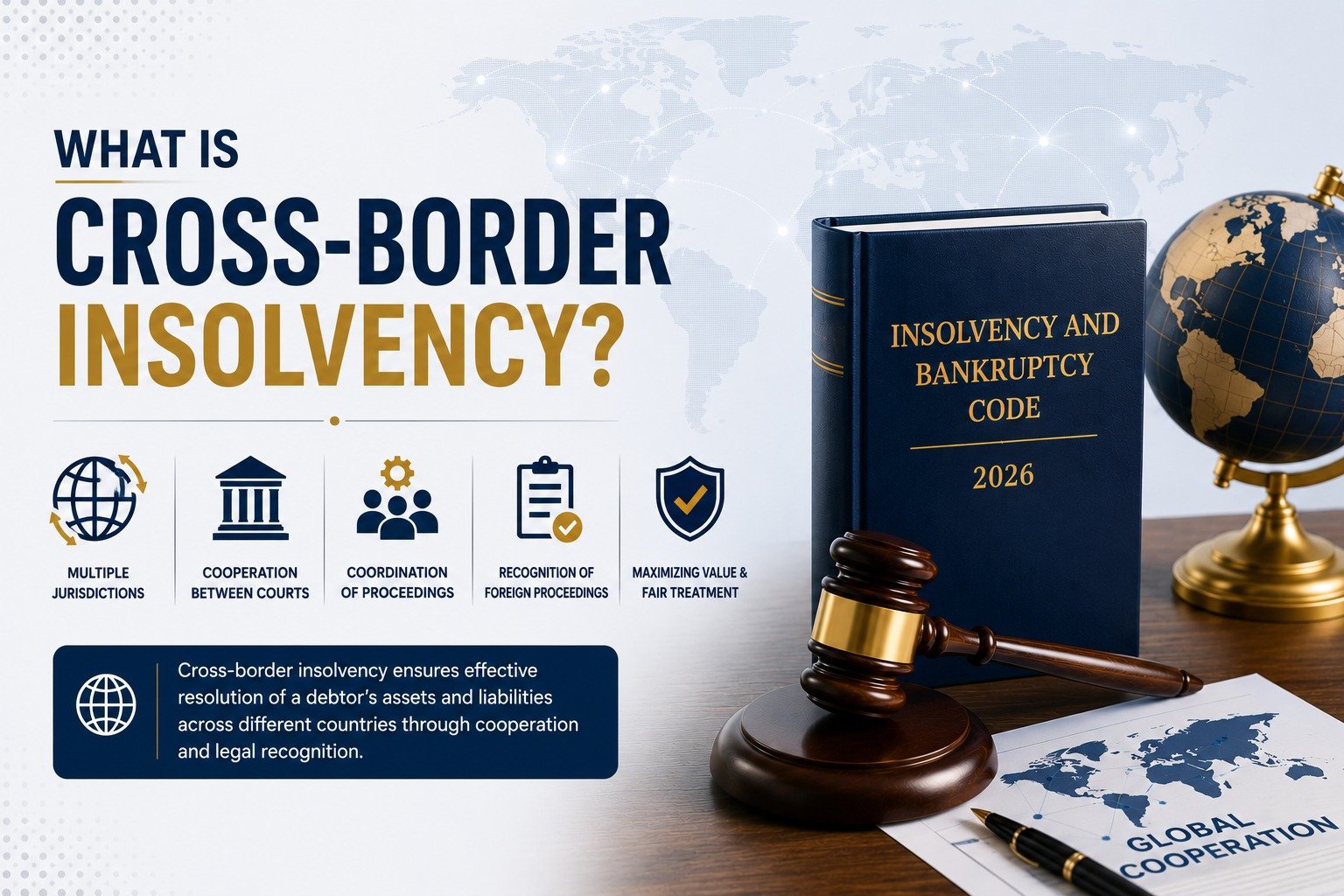
It is rescue funding provided during insolvency proceedings that may receive repayment priority over many existing creditors, subject to judicial approval.
The UNCITRAL Model Law provides an internationally recognized framework for cooperation in cross-border insolvency cases and has been adopted by many countries.
The reforms aim to improve business continuity, enhance creditor recoveries, attract foreign investment, and streamline multinational insolvency proceedings.