The Madhya Pradesh Legislative Assembly has passed the Uniform Civil Code (UCC) Bill, 2026, making it the fourth state after Uttarakhand, Gujarat, and Assam to adopt a Uniform Civil Code. The Bill will now be sent to the Governor for assent before it comes into force.
Presenting the Bill, Chief Minister Dr. Mohan Yadav said the Code is built on four key areas marriage, divorce, succession, and live-in relationships while assuring that religious rituals, customs, and traditions will continue without any interference.
What’s Changing?
The proposed law introduces several important changes:
- Marriage registration will be mandatory, and failure to register may attract a penalty.
- Polygamy will be prohibited for all citizens, irrespective of religion.
- The minimum marriage age will remain 21 years for men and 18 years for women across all communities.
- Divorce will only be valid through a court of law, bringing all marital dissolutions under judicial oversight.
- Live-in relationships must be registered, and a married person who conceals their marital status to enter a live-in relationship could face up to five years’ imprisonment.
- Sons and daughters will enjoy equal inheritance rights in ancestral property, strengthening gender equality in succession laws.
The Bill, however, exempts Scheduled Tribes and communities protected by customary laws.
Prepared by a seven-member committee headed by former Supreme Court Judge Justice Ranjana Prakash Desai, the draft was based on 1,164 public suggestions, with the State Government claiming 93% public support. During the Assembly debate, Congress MLA Arif Masood opposed the Bill and sought its referral to a Select Committee, but it was ultimately passed.
Why It Matters?
The Madhya Pradesh UCC Bill is another significant step in India’s ongoing discussion on a Uniform Civil Code under Article 44 of the Constitution. If it receives the Governor’s assent, it will bring a common legal framework for family matters while continuing to respect religious practices and customs.
As the law moves closer to implementation, it is expected to generate important constitutional and legal debates on balancing equality, personal laws, and religious freedom.
The Madhya Pradesh UCC Bill 2026 introduces a common legal framework for matters relating to marriage, divorce, succession, and live-in relationships while preserving religious customs and practices.
Yes. The Bill makes marriage registration compulsory, and failure to register may attract a penalty.
Yes. The proposed law prohibits polygamy for all citizens regardless of religion.
The Bill provides equal inheritance rights in ancestral property to both sons and daughters, promoting gender equality.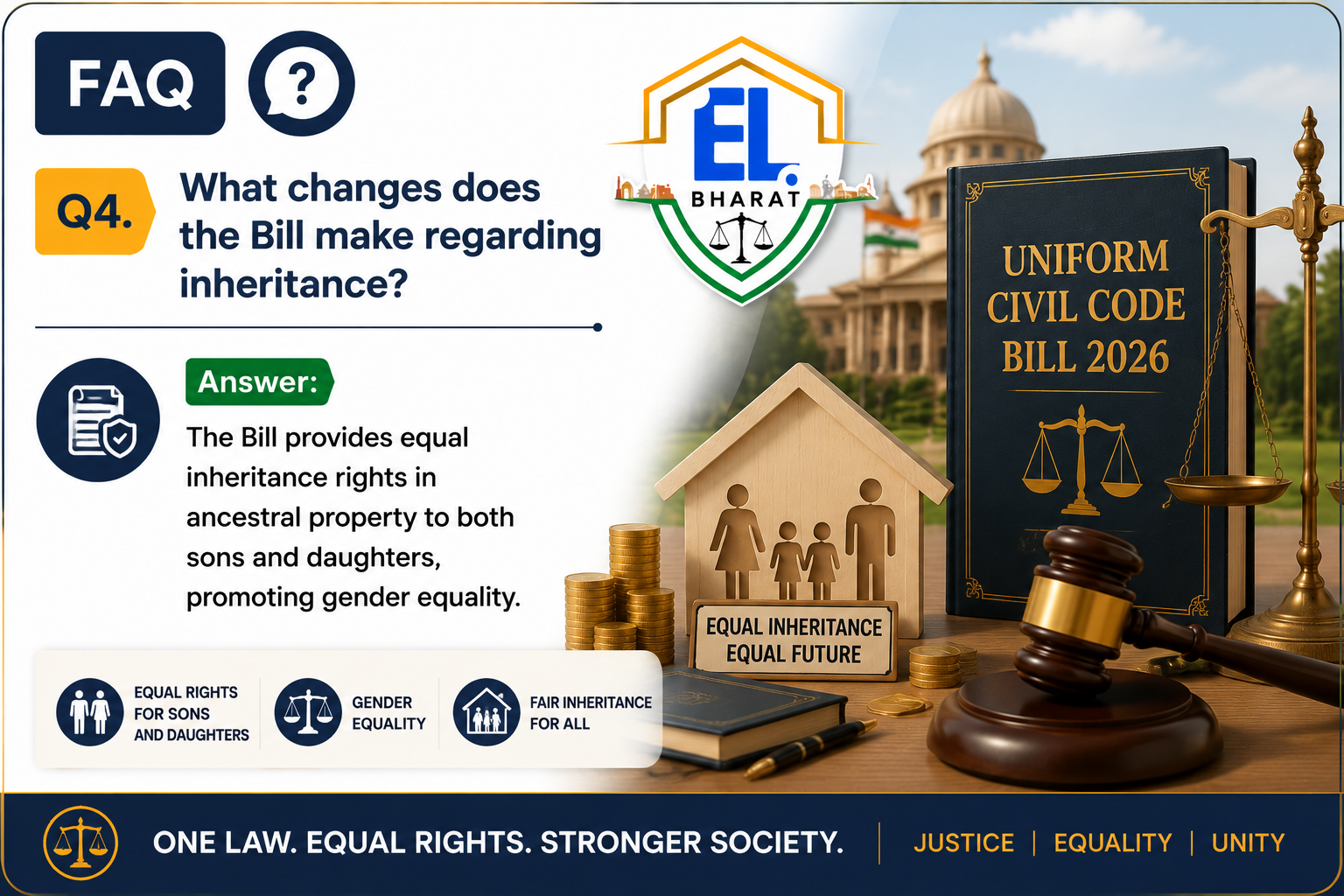
No. The Bill exempts Scheduled Tribes and communities protected by customary laws.