Oceans and seas cover nearly 70% of the Earth’s surface and are vital for climate regulation, biodiversity, global trade, and human survival. However, increasing pollution, oil spills, overfishing, and climate change have placed immense pressure on marine ecosystems. Since oceans are shared by all nations, protecting them requires coordinated international action rather than isolated national efforts.
The United Nations Convention on the Law of the Sea (UNCLOS), 1982, is the cornerstone of international marine environmental law. It establishes a comprehensive legal framework that requires States to prevent, reduce, and control marine pollution from ships, land-based sources, seabed activities, and the atmosphere. UNCLOS also promotes sustainable use of marine resources, environmental impact assessments, and international cooperation in protecting marine biodiversity.
Before the adoption of UNCLOS, customary international principles such as the Preventive Principle, Reasonable Use Principle, and Good Neighbourliness Principle laid the foundation for marine environmental protection. These principles require States to prevent environmental harm, use marine resources responsibly, and cooperate by sharing information on environmental threats.
Several international initiatives have further strengthened marine conservation. The World Summit on Sustainable Development (2002) reinforced the implementation of Agenda 21, encouraging sustainable management of oceans. Similarly, Multilateral Environmental Agreements (MEAs) complement UNCLOS by promoting cooperation among nations to address shared environmental challenges.
Regional conventions also play a significant role in protecting vulnerable marine ecosystems. The OSPAR Convention (1992) focuses on the North-East Atlantic, the Helsinki Convention (1992) protects the Baltic Sea from pollution, and the Barcelona Convention (1976) safeguards the Mediterranean Sea through coordinated pollution control and conservation measures.
UNCLOS also imposes specific obligations on States, including monitoring marine pollution, conducting scientific research, sharing environmental information, reporting pollution incidents, and adopting effective measures to prevent oil spills and other forms of marine 2 degradation. It encourages international collaboration to ensure that pollution affecting one nation does not threaten the marine environment of another.
In conclusion, international marine environmental law has evolved into a robust legal framework aimed at preserving one of Earth’s most valuable natural resources. Through treaties like UNCLOS, regional conventions, and multilateral cooperation, countries are
collectively working to protect marine ecosystems, promote sustainable use of ocean resources, and ensure that future generations inherit healthy and productive oceans.
The United Nations Convention on the Law of the Sea (UNCLOS), 1982, is the primary international treaty governing the use, protection, and conservation of the world’s oceans and marine resources.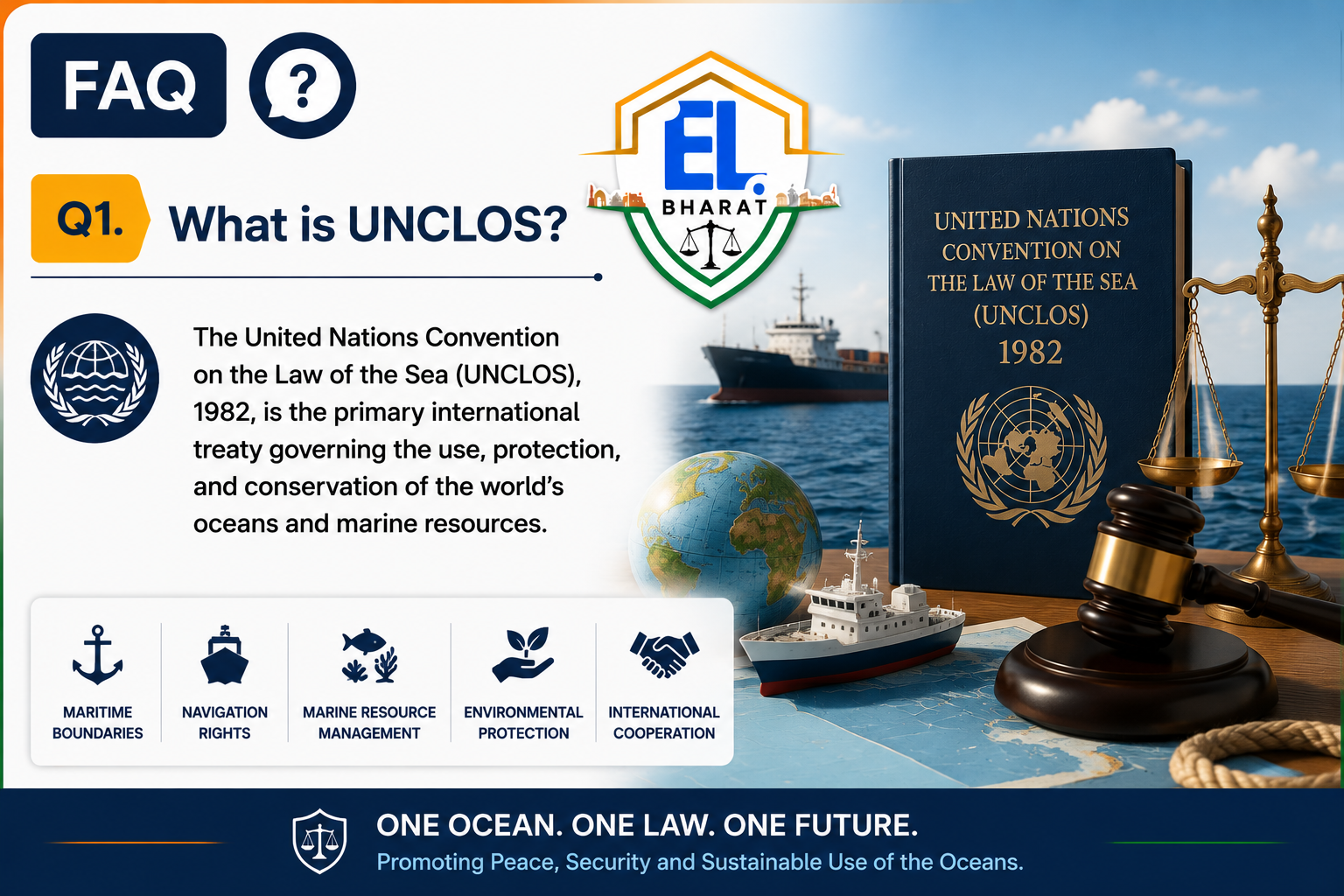
Marine environment protection helps preserve biodiversity, regulate the climate, support fisheries, facilitate international trade, and ensure sustainable use of ocean resources.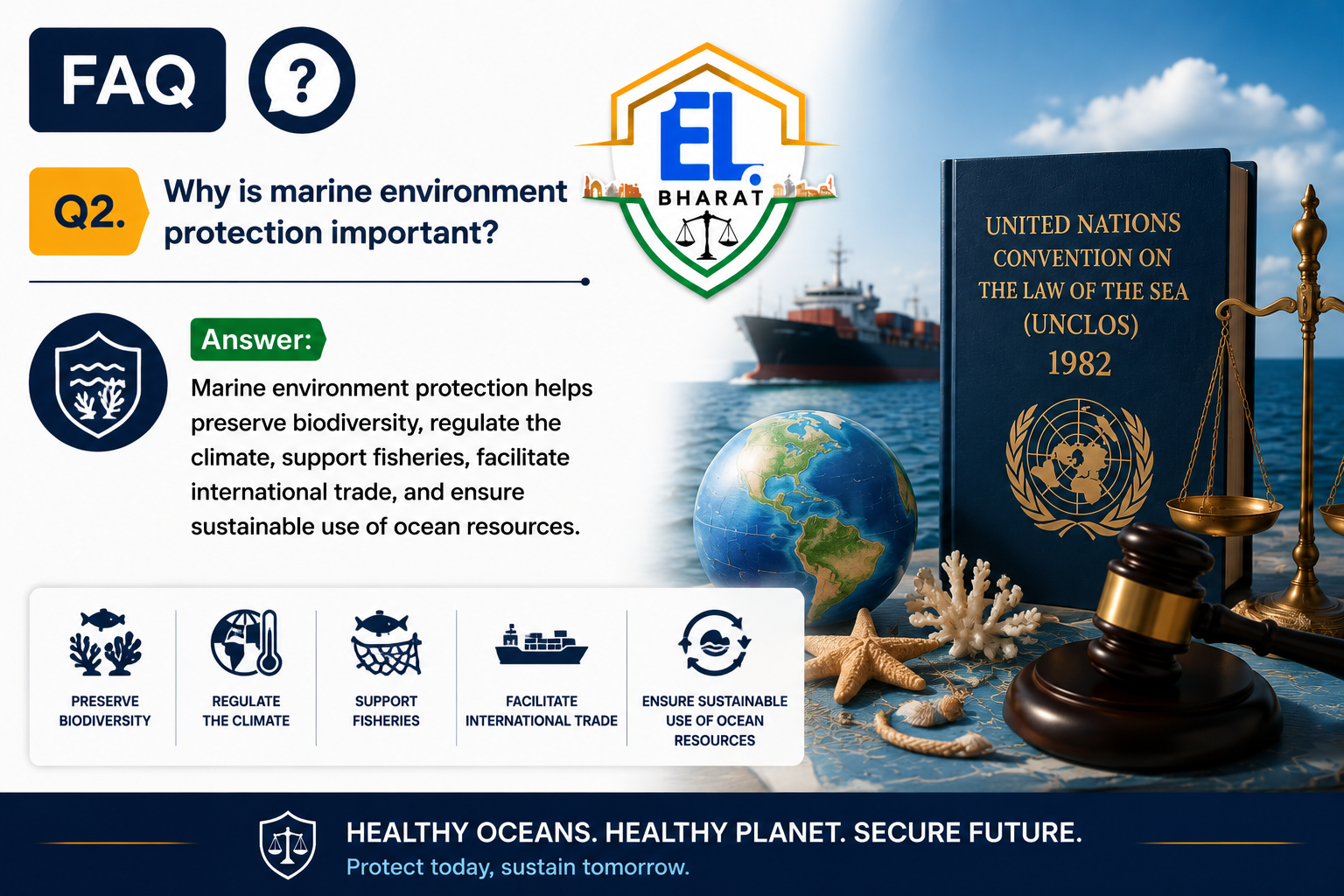
Key principles include the Preventive Principle, Reasonable Use Principle, Good Neighbourliness Principle, sustainable development, international cooperation, and pollution prevention.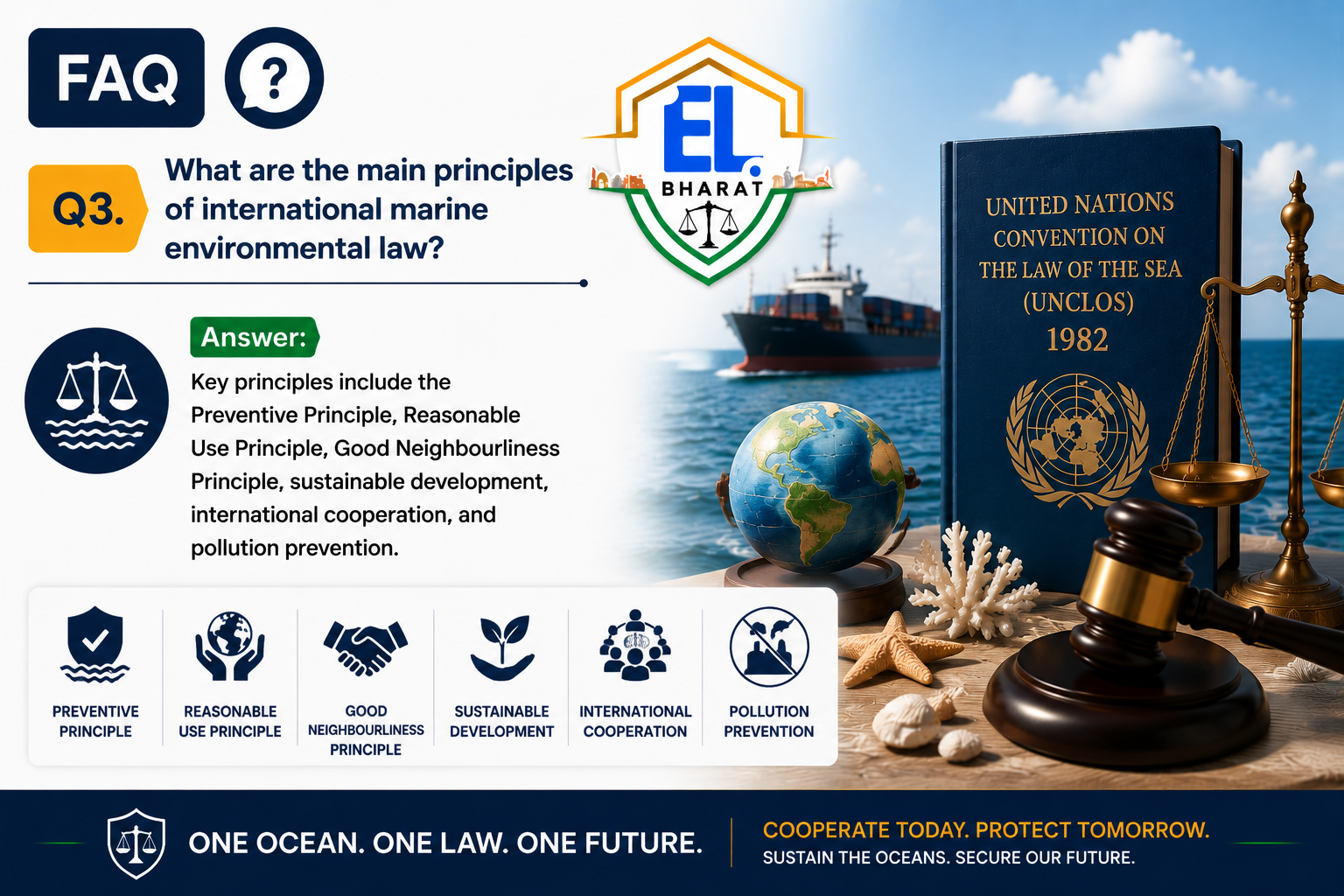
Major regional conventions include the OSPAR Convention (North-East Atlantic), Helsinki Convention (Baltic Sea), and Barcelona Convention (Mediterranean Sea).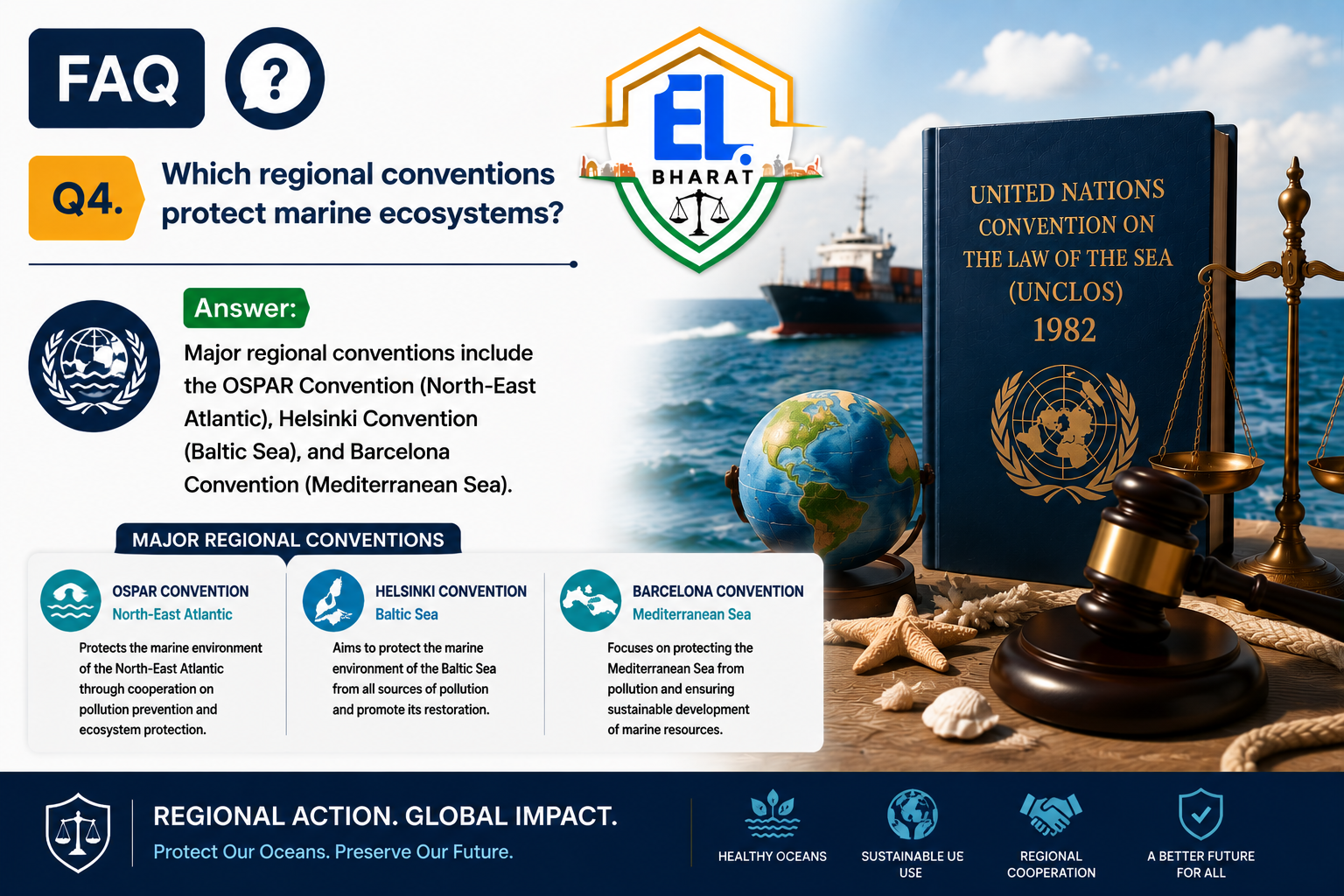
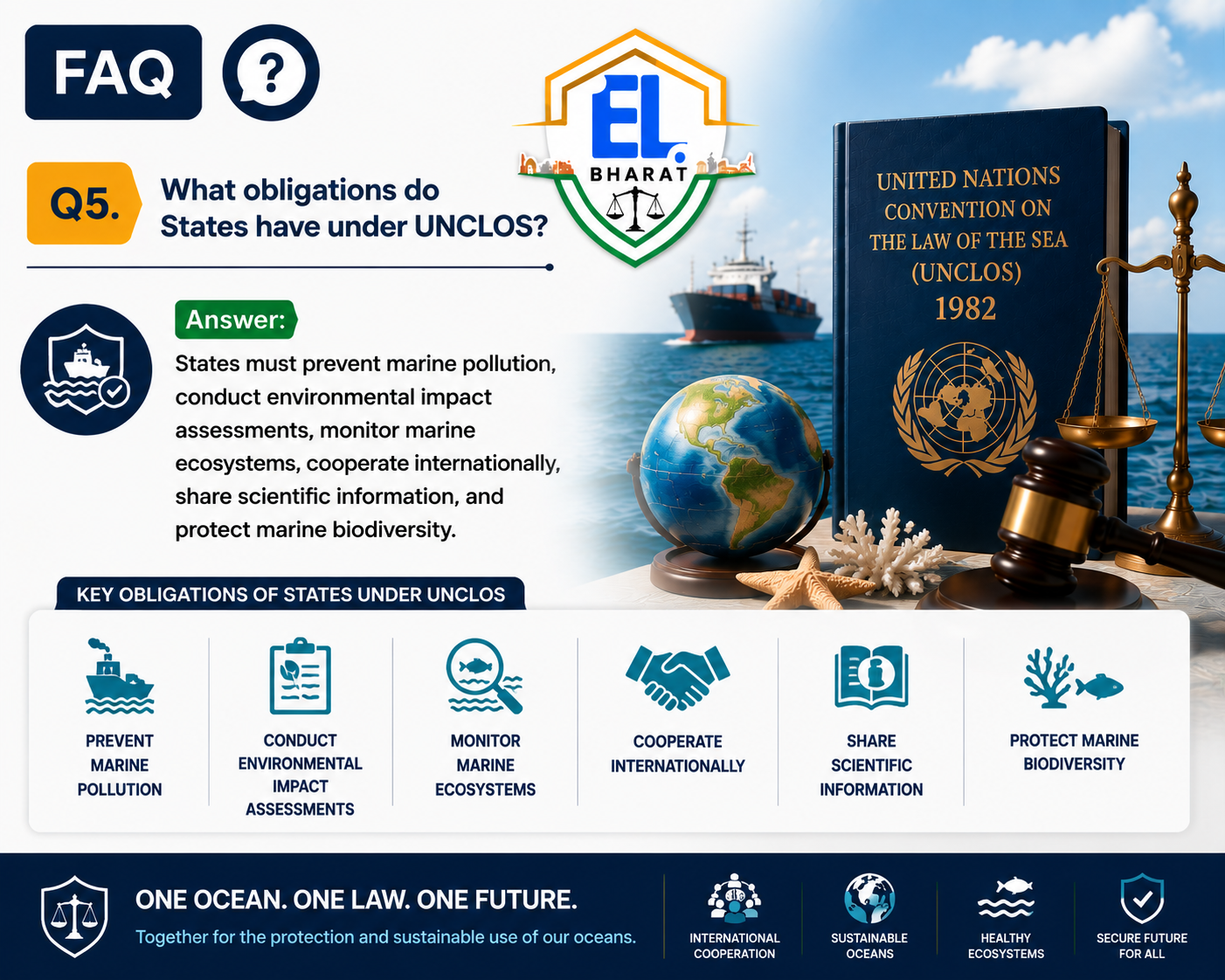
States must prevent marine pollution, conduct environmental impact assessments, monitor marine ecosystems, cooperate internationally, share scientific information, and protect marine biodiversity.