A Practical Guide for Businesses to Navigate GST Scrutiny and Protect Their Legal Rights
India’s Goods and Services Tax (GST) regime has significantly transformed the indirect tax landscape by introducing a technology-driven compliance framework. With the integration of e-invoicing, e-way bills, return matching, and advanced data analytics, the GST authorities today are able to identify discrepancies with greater speed and precision. Consequently, businesses are increasingly receiving GST notices for mismatches, compliance gaps, or documentation issues. While receiving a notice may appear alarming, it is important to understand that it is not a determination of liability but the commencement of a legal process that provides taxpayers an opportunity to explain their position.
Understanding a GST Notice
A GST notice is an official communication issued by the tax authorities under the Central Goods and Services Tax Act, 2017 (CGST Act) seeking clarification, documents, payment of tax, or compliance with statutory obligations. It may arise during routine scrutiny, audit, investigation, or assessment proceedings. Every notice specifies the legal provision under which it has been issued, the allegations made by the department, and the timeline within which the taxpayer is required to respond. Ignoring a GST notice can lead to ex-parte orders, recovery proceedings, interest, penalties, and prolonged litigation. Therefore, every notice deserves careful legal examination and a timely response.
Why Do Businesses Receive GST Notices?
Not every GST notice indicates tax evasion. In many cases, notices arise from routine compliance discrepancies that can be adequately explained. Common reasons include mismatches between GSTR-1 and GSTR-3B, incorrect or excess Input Tax Credit (ITC) claims, differences between ITC reflected in GSTR-2B and ITC claimed in returns, delayed filing of GST returns, non-payment or short payment of tax, errors in classification of goods or services, e-way bill inconsistencies, refund irregularities, or discrepancies identified through departmental data analytics. As the GST ecosystem becomes increasingly automated, even minor inconsistencies are likely to trigger departmental scrutiny.
The Importance of Responding Strategically
The manner in which a taxpayer responds to a GST notice can significantly influence the outcome of the proceedings. The first step should always be to carefully analyze the allegations contained in the notice rather than responding in haste. Businesses should collect all relevant supporting documents, including tax invoices, purchase and sales registers, GST returns, reconciliation statements, contracts, bank records, e-way bills, and correspondence with suppliers or customers. A legally sound reply should address each allegation separately, supported by documentary evidence and, where necessary, relevant statutory provisions, notifications, circulars, and judicial precedents. If the department grants an opportunity for a personal hearing, taxpayers should utilize it effectively to present their case before the assessing authority.
GST Assessments: What Businesses Should Know
A GST assessment is the statutory process through which the tax authorities determine the tax liability of a registered person. The CGST Act provides for different forms of assessment, including self-assessment, provisional assessment, scrutiny assessment, best judgment assessment, and assessment of unregistered persons. Each follows a prescribed legal procedure and must comply with the principles of natural justice. Businesses should remember that an assessment order is not immune from challenge and can be contested before the appropriate appellate authority if found to be legally unsustainable.
Documentation Is Your Strongest Defense
In GST litigation, documentation often determines the strength of a taxpayer’s case. Businesses should maintain complete and accurate records of tax invoices, purchase and sales registers, e way bills, delivery challans, payment records, vendor reconciliations, GST returns, and statutory filings. Proper documentation not only facilitates timely compliance but also enables businesses to effectively defend themselves during audits, investigations, and assessment proceedings. Poor record management, on the other hand, frequently results in avoidable tax disputes and financial exposure.
Legal Rights Available to Taxpayers
GST law incorporates several procedural safeguards to ensure fairness in tax administration. Every taxpayer has the right to receive a valid notice, submit a detailed written response, produce documentary evidence, seek a personal hearing wherever applicable, and receive a reasoned or “speaking” order from the authority. Where an adverse order is passed, the taxpayer also has the statutory right to challenge it before the appellate forums. These safeguards reflect the fundamental principles of natural justice and ensure that no tax demand is imposed without providing the taxpayer a reasonable opportunity to be heard.
Building a Proactive GST Compliance Framework
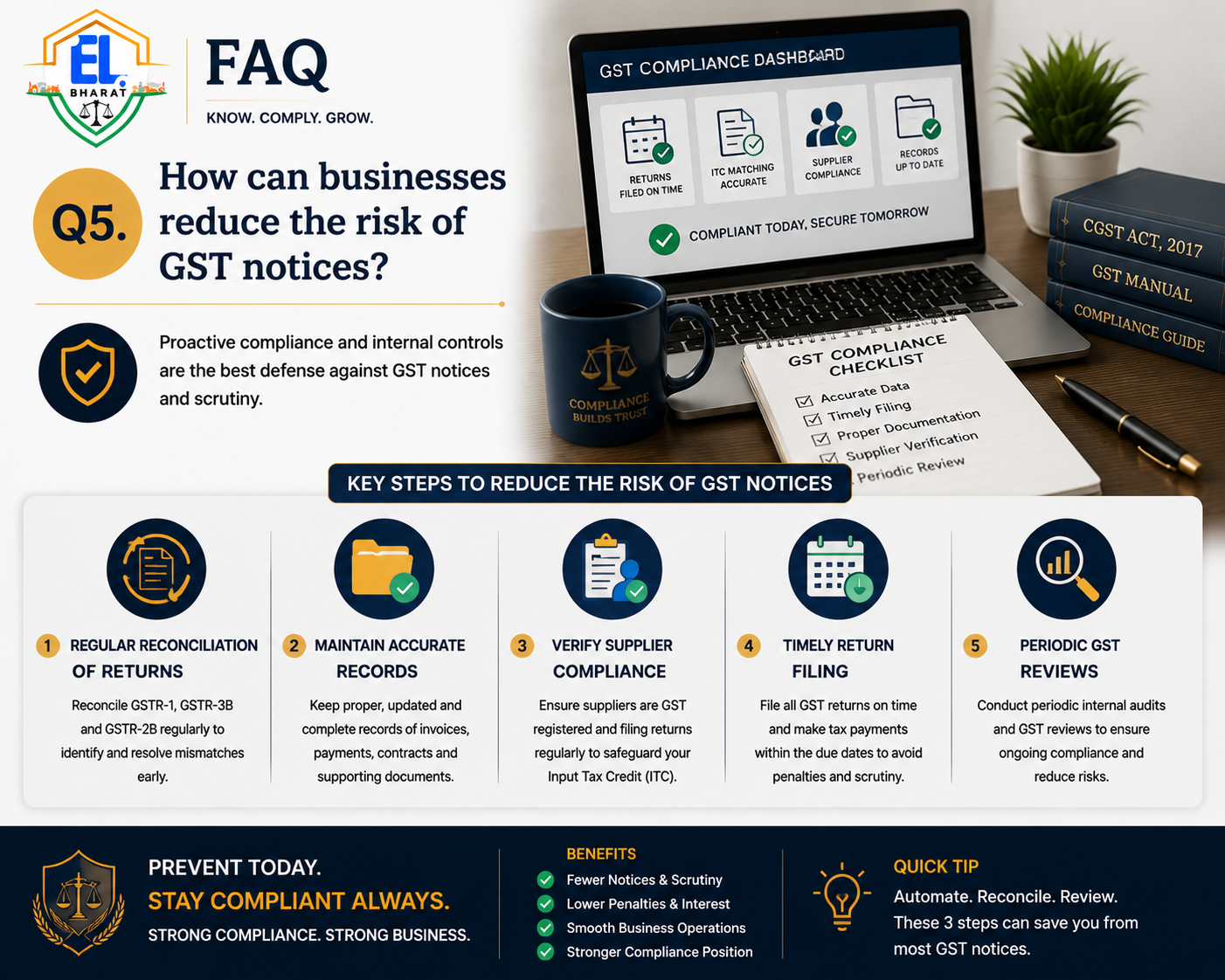
In today’s digital tax environment, businesses should adopt a proactive rather than reactive approach to GST compliance. Regular reconciliation of GSTR-1, GSTR-3B, and GSTR-2B, verification of supplier compliance before claiming Input Tax Credit, timely filing of returns, periodic internal GST reviews, and maintenance of comprehensive records can substantially reduce the risk of receiving notices. Seeking timely legal advice in complex matters involving investigations, assessments, or high-value tax demands can further safeguard business interests and minimize litigation.
Conclusion
The increasing use of technology by GST authorities has fundamentally changed the compliance landscape. While GST notices have become more frequent, they should not be viewed as an indication of wrongdoing. Instead, they represent an opportunity for taxpayers to clarify discrepancies and protect their legal position through an informed and well-supported response.
For businesses operating in an evolving regulatory environment, effective GST compliance extends beyond timely return filing. It requires robust documentation, continuous monitoring, and a clear understanding of legal rights and obligations. A proactive and legally sound approach to GST notices and assessments can not only prevent unnecessary disputes but also strengthen long-term business compliance and regulatory confidence.
A GST notice is an official communication issued by the tax authorities seeking clarification, documents, payment of tax, or compliance under the CGST Act, 2017.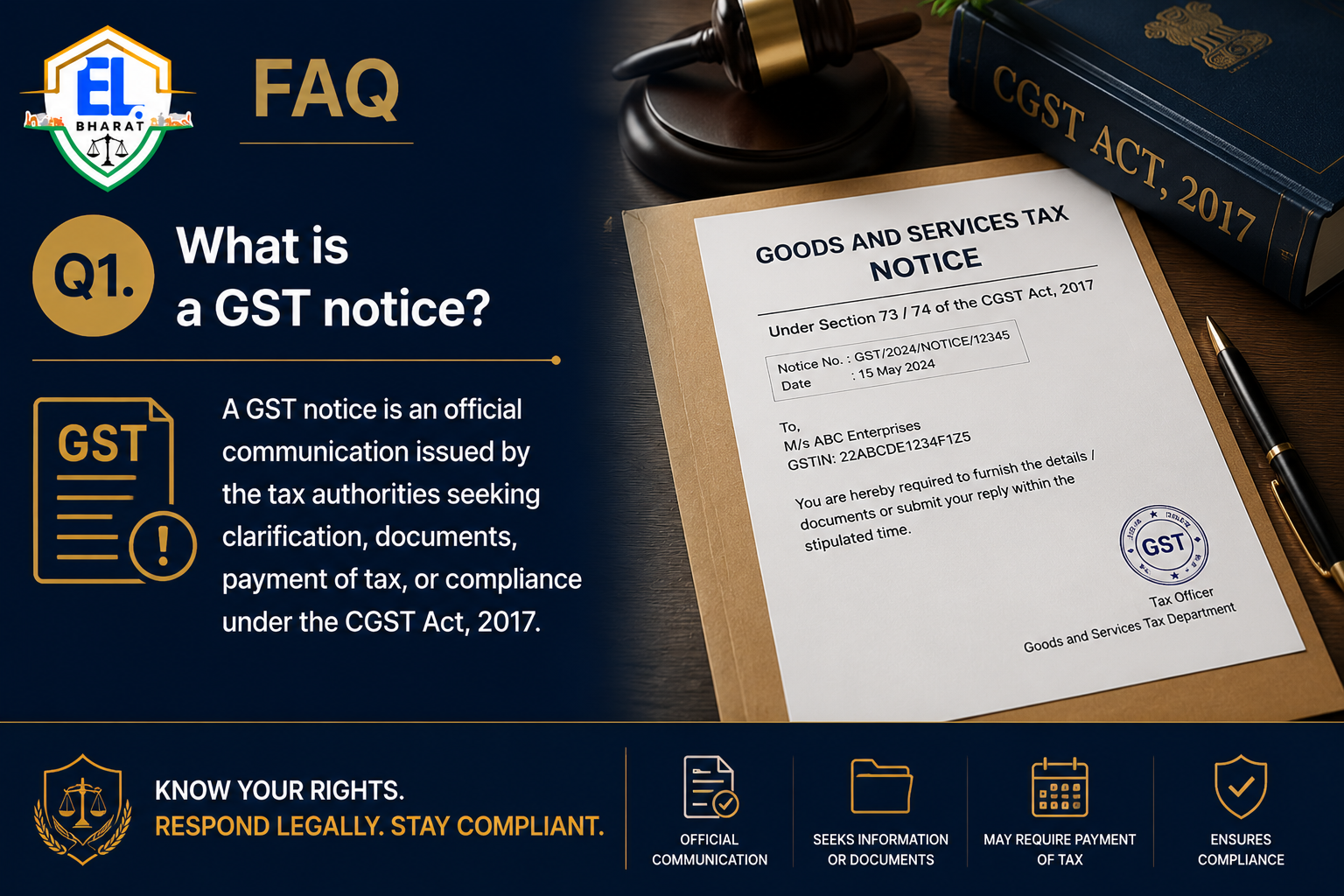
Common reasons include GSTR mismatches, incorrect Input Tax Credit (ITC) claims, delayed return filing, tax shortfalls, e-way bill discrepancies, refund issues, or data analytics-based scrutiny.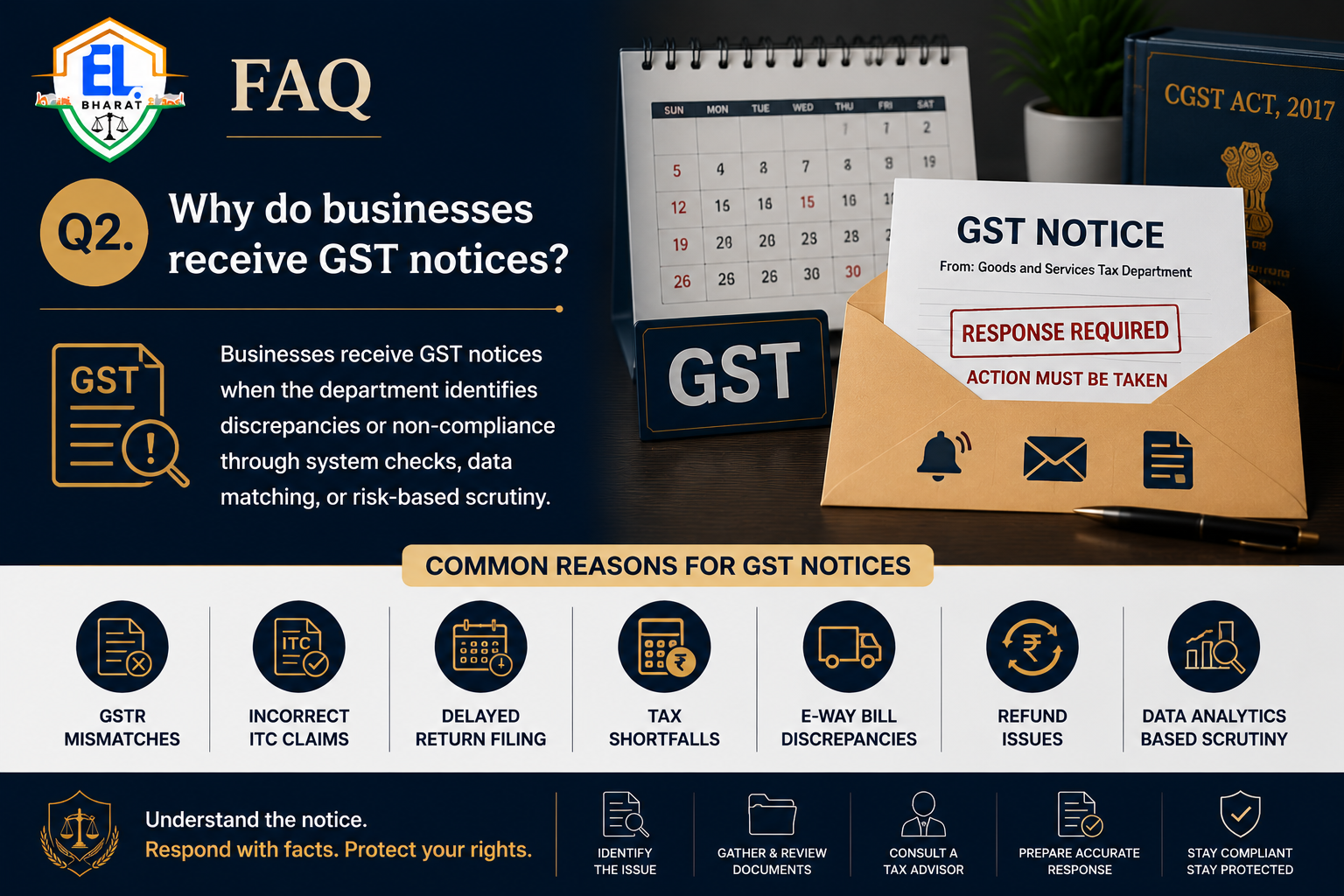
Businesses should carefully review the notice, gather supporting documents, prepare a point-wise legal response with evidence, and attend any personal hearing if offered.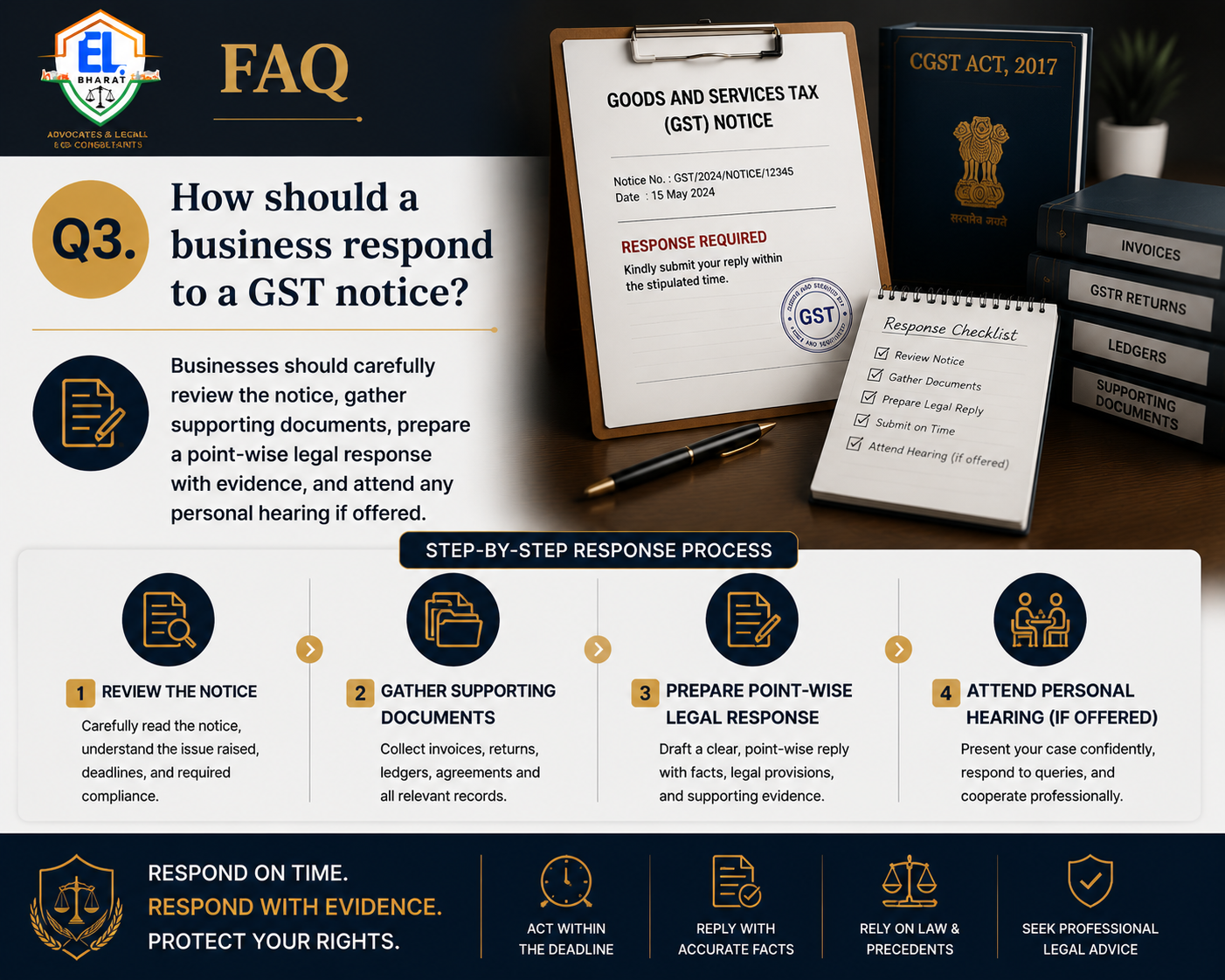
Taxpayers have the right to receive a valid notice, submit evidence, seek a personal hearing, obtain a reasoned order, and challenge adverse decisions before the appropriate appellate authority.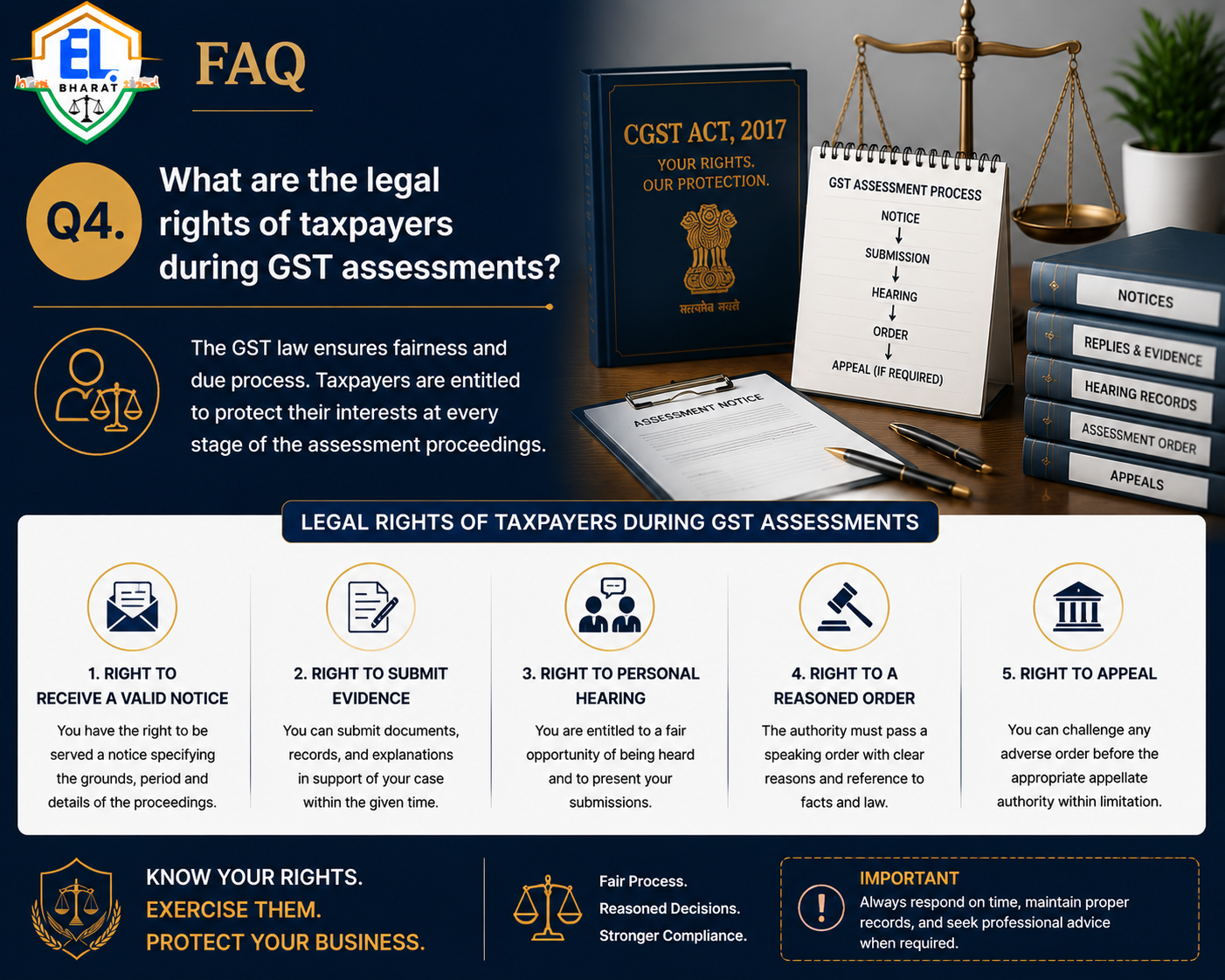
Regular reconciliation of GSTR-1, GSTR-3B, and GSTR-2B, maintaining accurate records, verifying supplier compliance, timely return filing, and periodic GST reviews help minimize compliance risks.