Artificial Intelligence (AI) is changing how technology companies are valued and acquired. Unlike traditional mergers and acquisitions, where buying a company meant acquiring its assets, intellectual property, and workforce, AI deals increasingly focus on acquiring the capability behind the technology.
A clear example is the July 2025 Windsurf transaction. Google reportedly paid USD 2.4 billion to hire Windsurf’s CEO and key research team while obtaining a non-exclusive license to its technology. Shortly afterwards, Cognition AI acquired the remaining business, including its products, intellectual property, brand, and engineering teams. The deal demonstrated that different buyers can acquire different parts of an AI company’s value.
The key lesson is that in AI transactions, the question is no longer “Who bought the company?” but “What capability was actually acquired?”
AI capability extends beyond source code. It includes training datasets, customer data, cloud infrastructure, third-party AI models, contractual rights, and the specialized knowledge of engineers and researchers. Since many of these components are licensed or dependent on 1 2 external parties, acquiring a company alone may not guarantee the ability to develop or commercialize its AI products.
Regulators have also recognized this shift. In 2024, the UK Competition and Markets Authority (CMA) reviewed Microsoft’s arrangement with Inflection AI, where Microsoft hired the company’s leadership team and licensed its technology without acquiring the company. The case highlighted that transferring talent and technical capability can have merger implications even without a traditional acquisition.
For this reason, AI due diligence must begin with capability mapping. Buyers should verify ownership of source code, rights over training data, third-party licenses, regulatory compliance, infrastructure dependencies, and the retention of key personnel.
Data governance is equally critical. Under India’s Digital Personal Data Protection Act, 2023 (DPDP Act), personal data can only be processed for lawful and specified purposes. Therefore, acquiring a dataset does not automatically permit its continued use for AI training or product development.
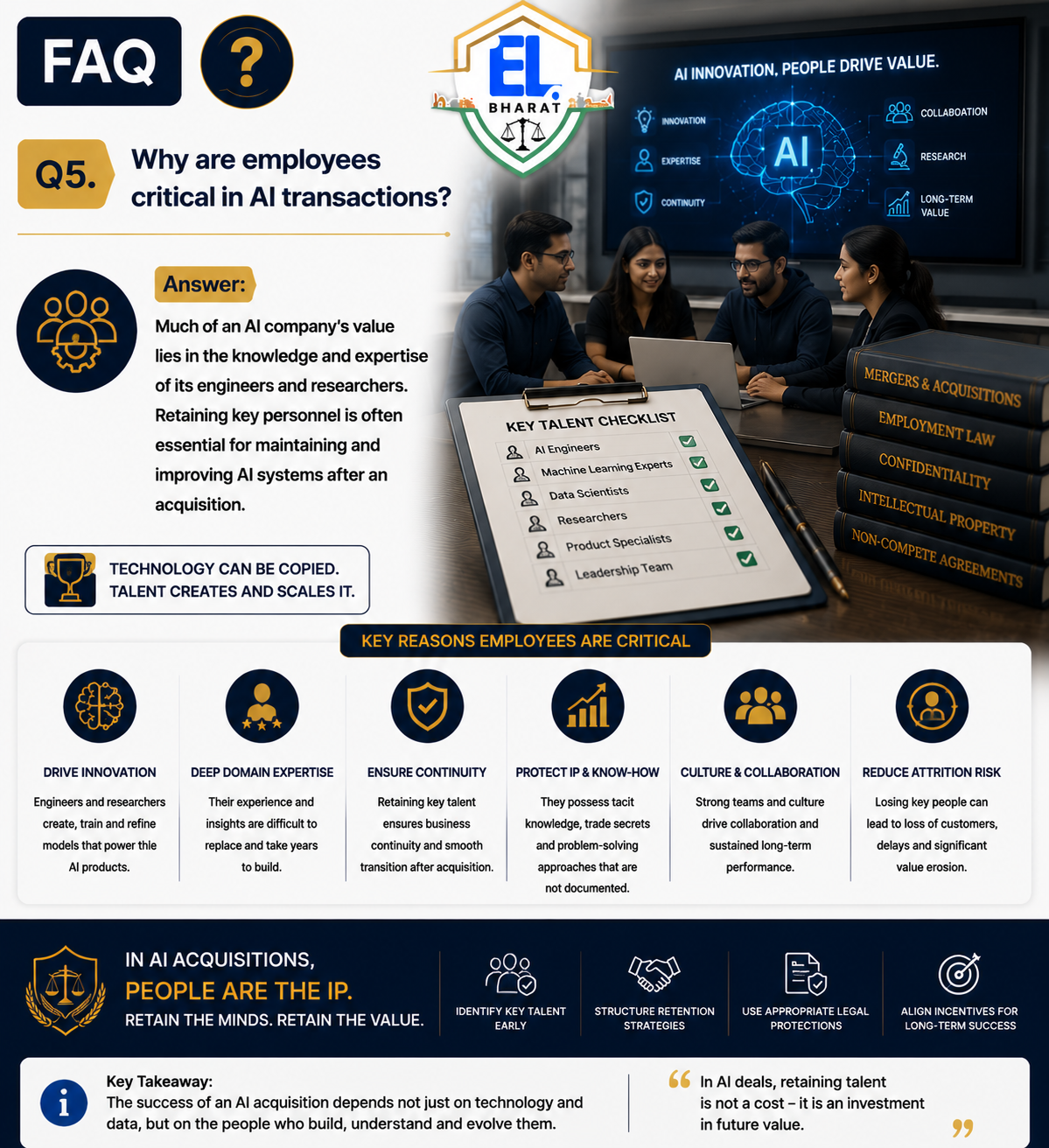
Ultimately, people remain central to AI capability. While technology can be transferred, the expertise required to maintain and improve AI systems often resides with key employees. Businesses should therefore prioritize retention strategies, confidentiality protections, and knowledge-transfer mechanisms.
As AI transactions become more sophisticated, legal due diligence can no longer focus solely on ownership. The real value lies in ensuring that the buyer acquires the complete capability needed to develop, deploy, and commercialize the AI system. In today’s AI economy, buying the company does not always mean buying the capability.
AI transactions often focus on acquiring technology, talent, datasets, licensing rights, and operational capability rather than merely purchasing the company itself.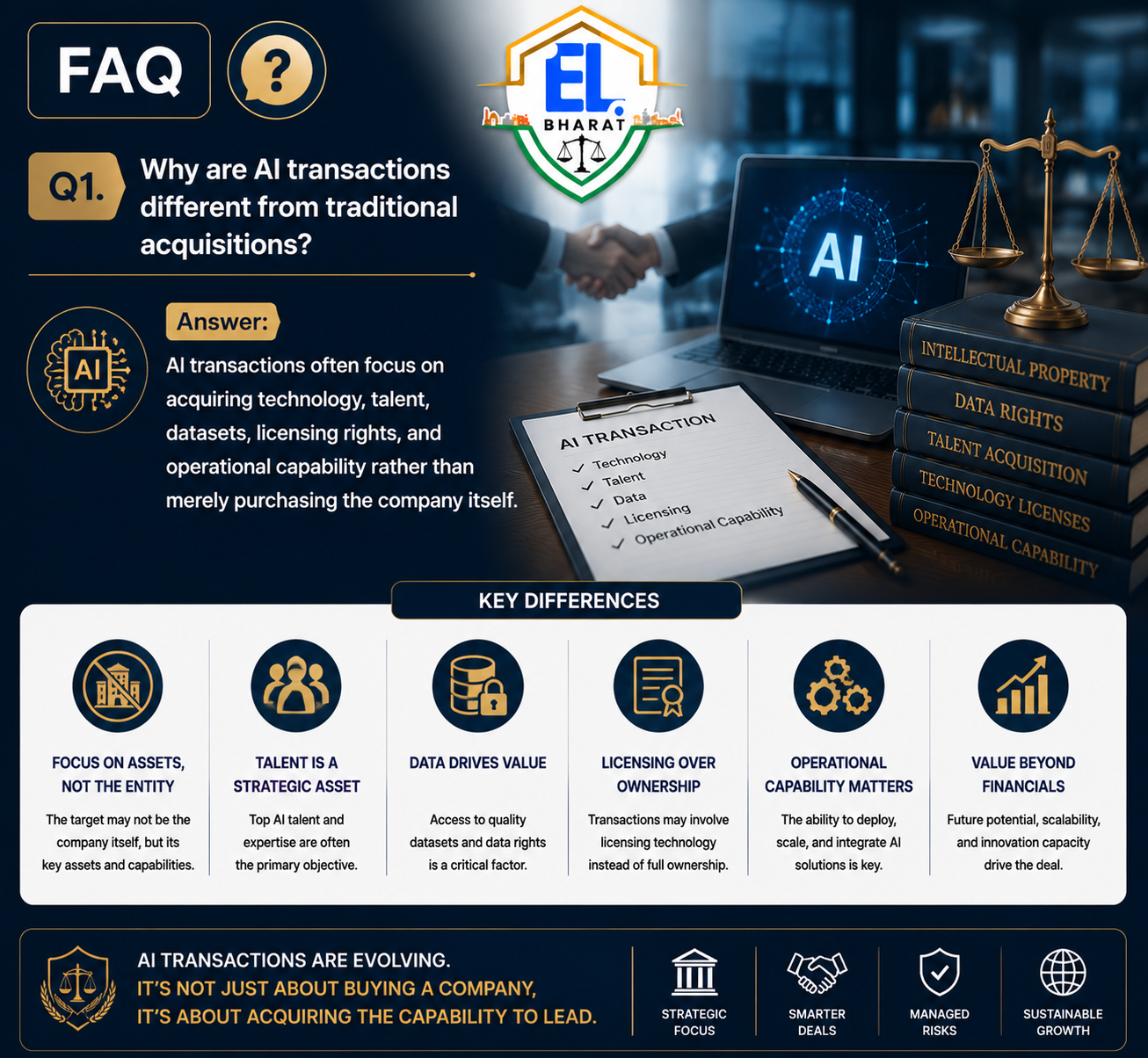
AI capability includes source code, trained models, datasets, cloud infrastructure, intellectual property rights, contracts, and the expertise of engineers and researchers.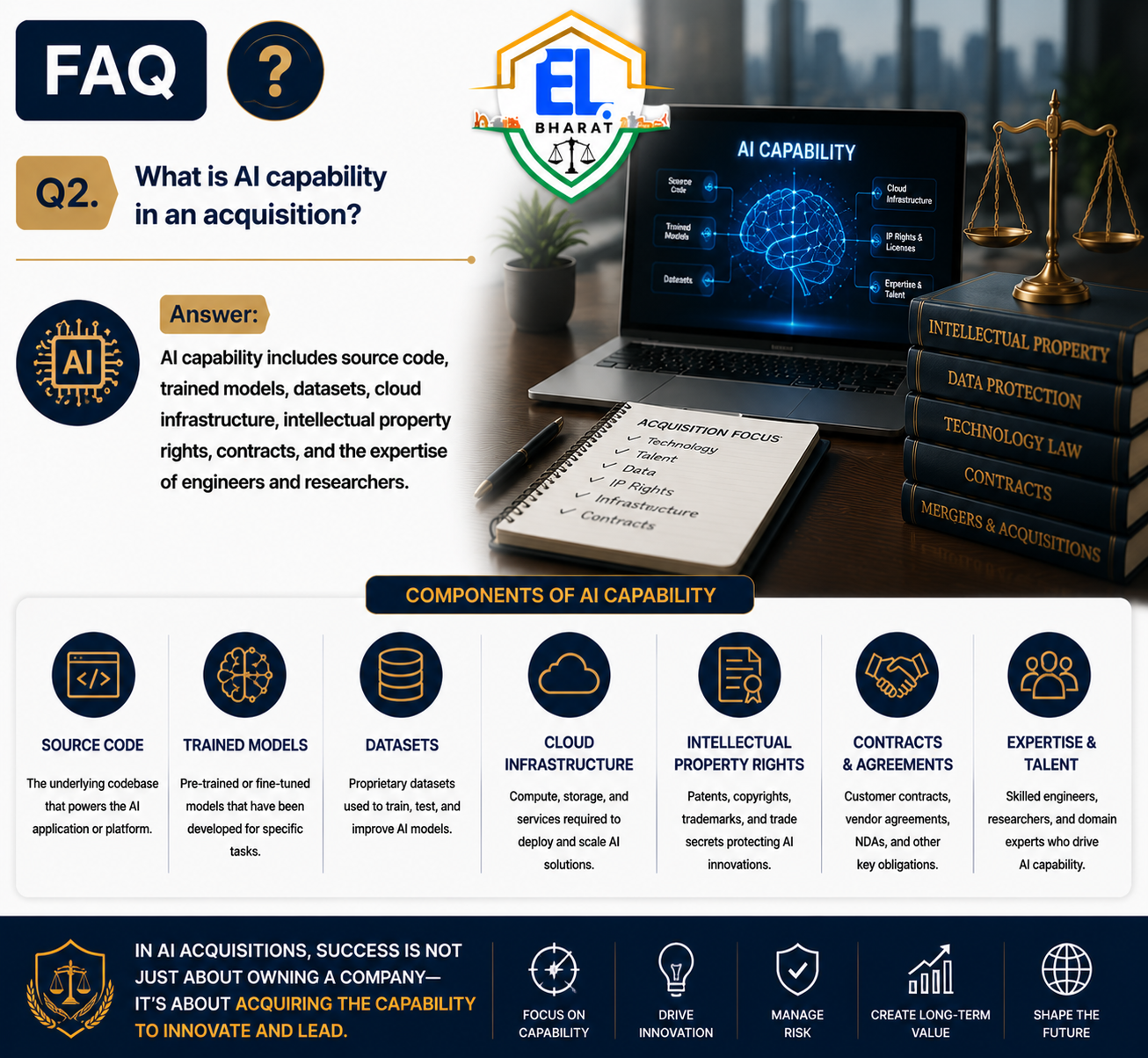
AI due diligence helps buyers verify ownership of intellectual property, licensing rights, regulatory compliance, data governance, infrastructure dependencies, and retention of key personnel.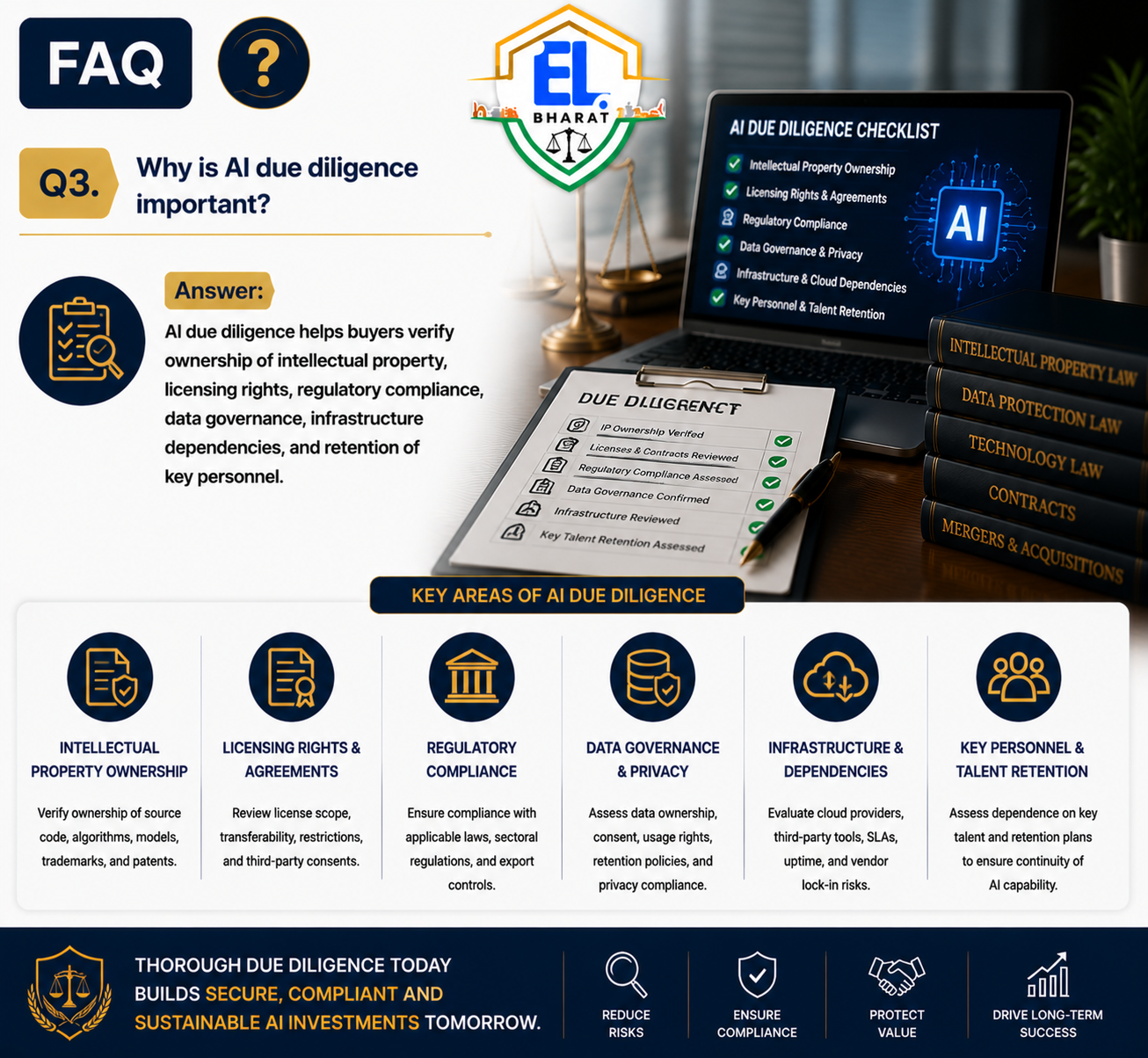
Under the Digital Personal Data Protection Act, 2023, personal data must be processed only for lawful and specified purposes. Acquiring a dataset does not automatically authorize its use for AI training or product development.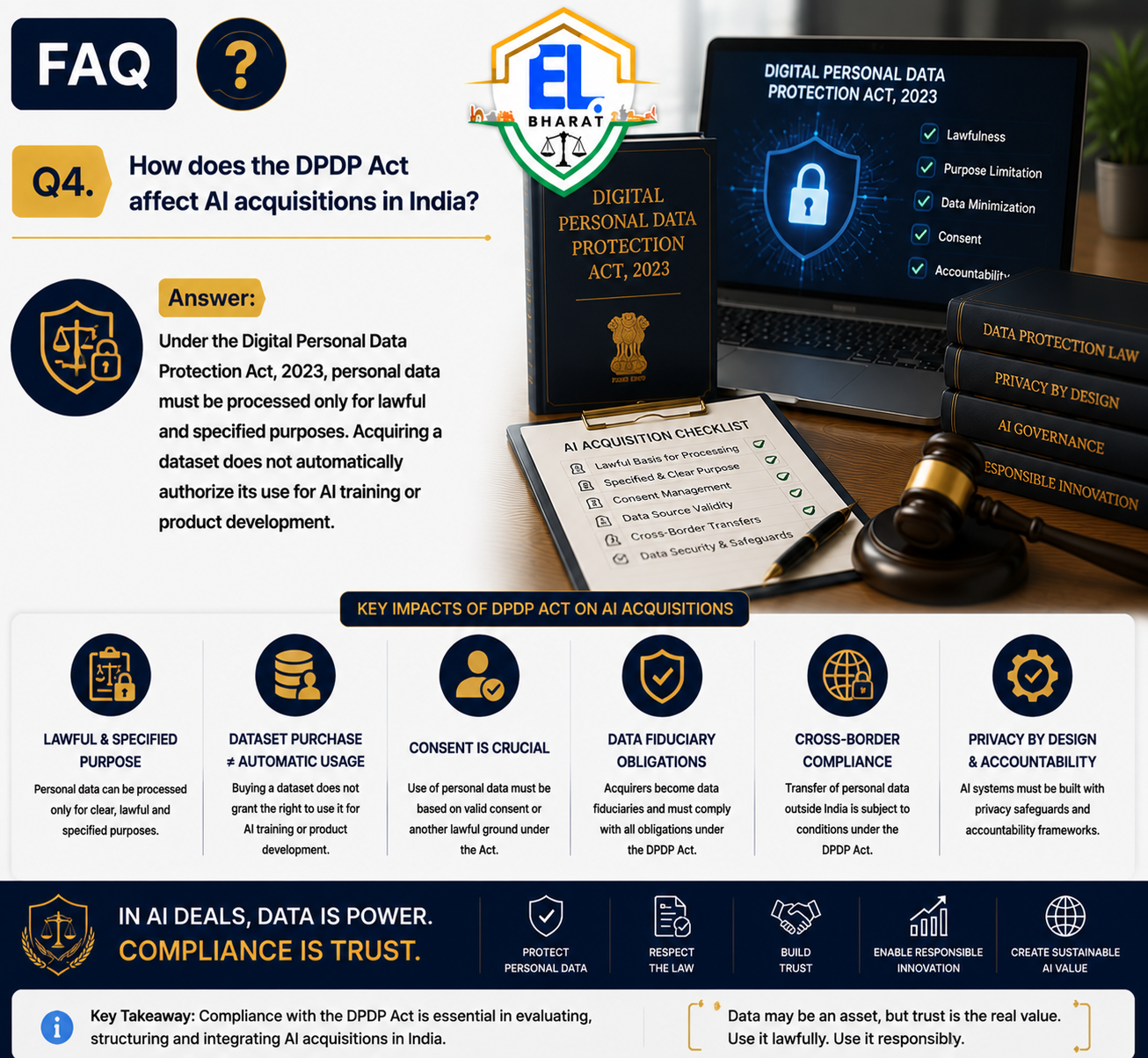
Much of an AI company’s value lies in the knowledge and expertise of its engineers and researchers. Retaining key personnel is often essential for maintaining and improving AI systems after an acquisition.