The legal tussle between the Enforcement Directorate (ED) and the All India Trinamool Congress (TMC) has entered a crucial phase, with the Calcutta High Court refusing to grant interim relief to the ruling West Bengal party.
In an important development, the Court declined TMC’s request to allow the operation of three bank accounts that were frozen by the Enforcement Directorate as part of an ongoing money laundering investigation. For now, the accounts will remain frozen until the Court takes a final call on the matter.
What’s the Case About?
The controversy revolves around nearly ₹440 crore, which the ED alleges was transferred to Carewell Aviation India and one of its associated entities between April 2023 and June 2026. According to the investigating agency, these transactions are being examined in connection with the alleged purchase of an aircraft and a helicopter. The investigation is being conducted under the Prevention of Money Laundering Act, 2002 (PMLA), one of India’s key anti money laundering laws. Disputing the ED’s action, TMC approached the Calcutta High Court, arguing that the freezing of its bank accounts should be lifted.
What Did the High Court Say?
Justice Krishna Rao, while hearing the matter, was not inclined to grant immediate relief. In an interim order passed on Monday, the Court refused to permit the Trinamool Congress to operate the frozen accounts while its petition challenging the ED’s decision is still pending. This means the Enforcement Directorate’s freeze will continue until further orders. Importantly, the Court has not yet ruled on whether the ED’s action is legally valid. It has only decided that there is no case for interim relief at this stage.
Not the First Time TMC’s Accounts Have Been Frozen
Interestingly, this is the second time the party has found itself before the High Court over frozen bank accounts but under very different circumstances. Earlier, another Bench of the Calcutta High Court had provided relief to TMC after the West Bengal Police directed the freezing of its accounts based on a complaint by rebel TMC MLA Biswanath Das, who had alleged misuse of party funds. The present dispute, however, has no connection with that case. It arises from an independent investigation by the Enforcement Directorate under the PMLA, making the legal issues entirely different.
Why This Order Matters
Although the order is only interim in nature, it sends a clear message that courts are generally reluctant to interfere with investigative measures under the Prevention of Money Laundering Act unless there are compelling grounds.
By allowing the freeze to continue, the High Court has effectively given the Enforcement Directorate the space to proceed with its investigation while the legality of the freezing order is examined in detail.
The final verdict will determine whether the ED’s action was justified, but for now, the Trinamool Congress will not have access to the three frozen bank accounts.
As the case progresses, it is expected to remain under close public and political scrutiny, particularly because it touches upon issues of political funding, financial accountability, and the investigative powers of the Enforcement Directorate under India’s anti-money laundering framework.
The Court held that there were no sufficient grounds to grant interim relief at this stage and allowed the Enforcement Directorate’s freeze on the bank accounts to continue while the case is pending.
The Enforcement Directorate froze the accounts as part of an investigation into alleged money laundering involving approximately ₹440 crore connected to transactions related to the purchase of an aircraft and a helicopter.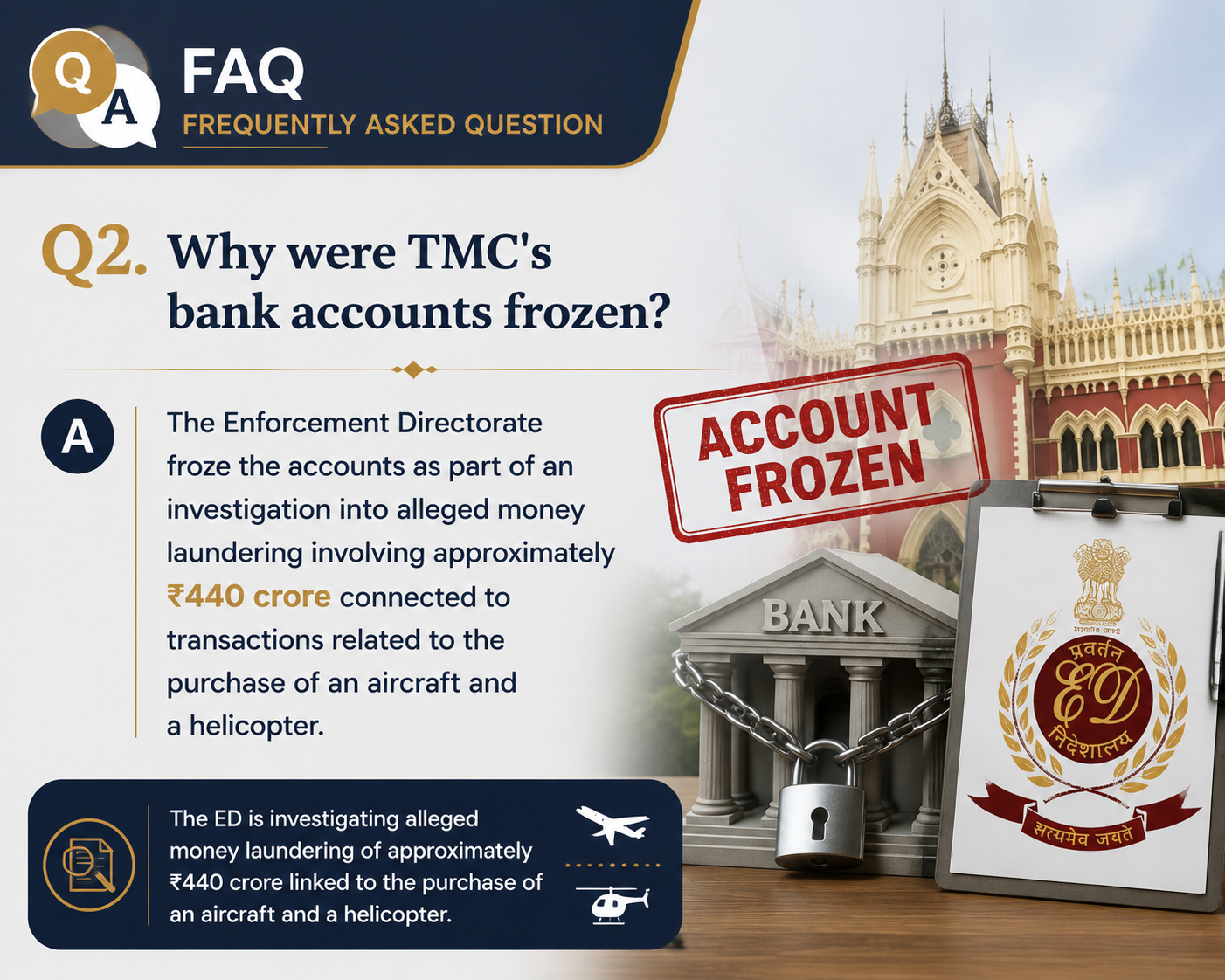
The investigation is being conducted under the Prevention of Money Laundering Act, 2002 (PMLA).
No. The Court has only declined interim relief. The legality of the Enforcement Directorate’s action will be decided after hearing the main petition.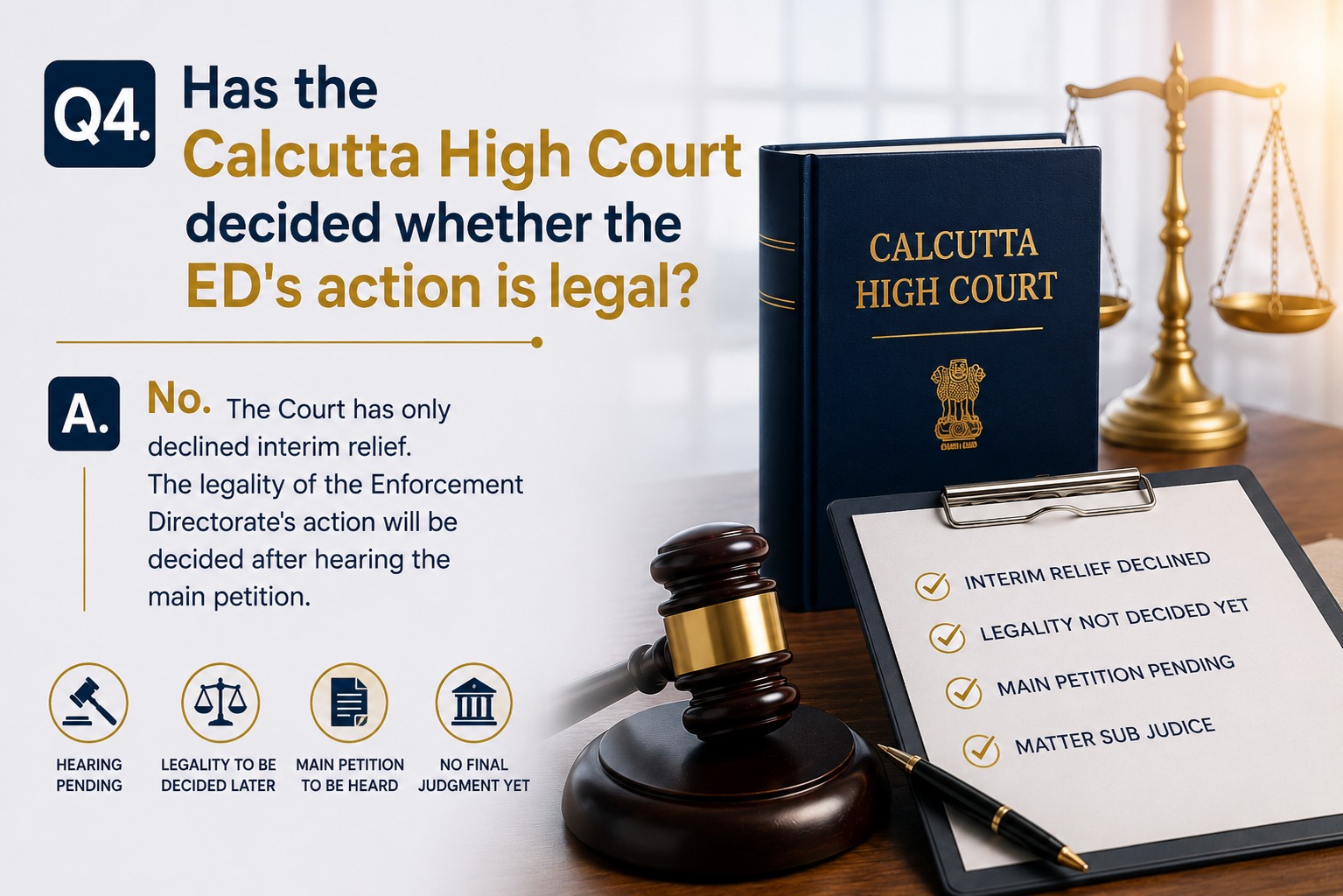
The case raises important legal issues concerning the Enforcement Directorate’s investigative powers under the PMLA, political funding, financial accountability, and judicial review of interim investigative measures.