In an important decision supporting freedom of the press, the Delhi High Court has withdrawn its earlier interim order that stopped digital news platform The Wire is publishing further articles about former Delhi Chief Secretary Naresh Kumar.
The court said that it is not fair to stop a news organization from publishing future reports simply because they might be defamatory. Such a restriction is too broad and is based only on assumptions, not facts.
The High Court also made it clear that courts cannot assume that future news reports will be defamatory before they are even written or published. If someone believes that a published article is defamatory, the issue can be examined after publication based on the actual content of the report.
The Court further stated that freedom of speech and expression, guaranteed under Article 19(1)(a) of the Constitution of India, is an important constitutional right. Any restriction on the media should be imposed only in exceptional situations where there are strong legal reasons to do so.
This ruling is a significant reminder that a free press plays a vital role in a democracy. While every person has the right to protect their reputation, courts cannot restrict future reporting based on mere possibilities or assumptions.
Key Highlights
- The Delhi High Court removed its earlier order restricting The Wire from publishing future articles on Naresh Kumar.
- The court held that future reporting cannot be stopped based on assumptions.
- It said that courts cannot presume that an article will be defamatory before it is published.
- The judgement strengthens the constitutional right to freedom of the press under Article 19(1)(a).
- Any claim of defamation must be decided after examining the published content, not on the basis of speculation. The judgement reinforces that freedom of the press cannot be limited on hypothetical grounds and that prior restrictions on future publications should be used only in rare and legally justified cases.
The Court held that future publications cannot be restrained merely on the assumption that they may be defamatory. Any allegation of defamation must be examined after publication.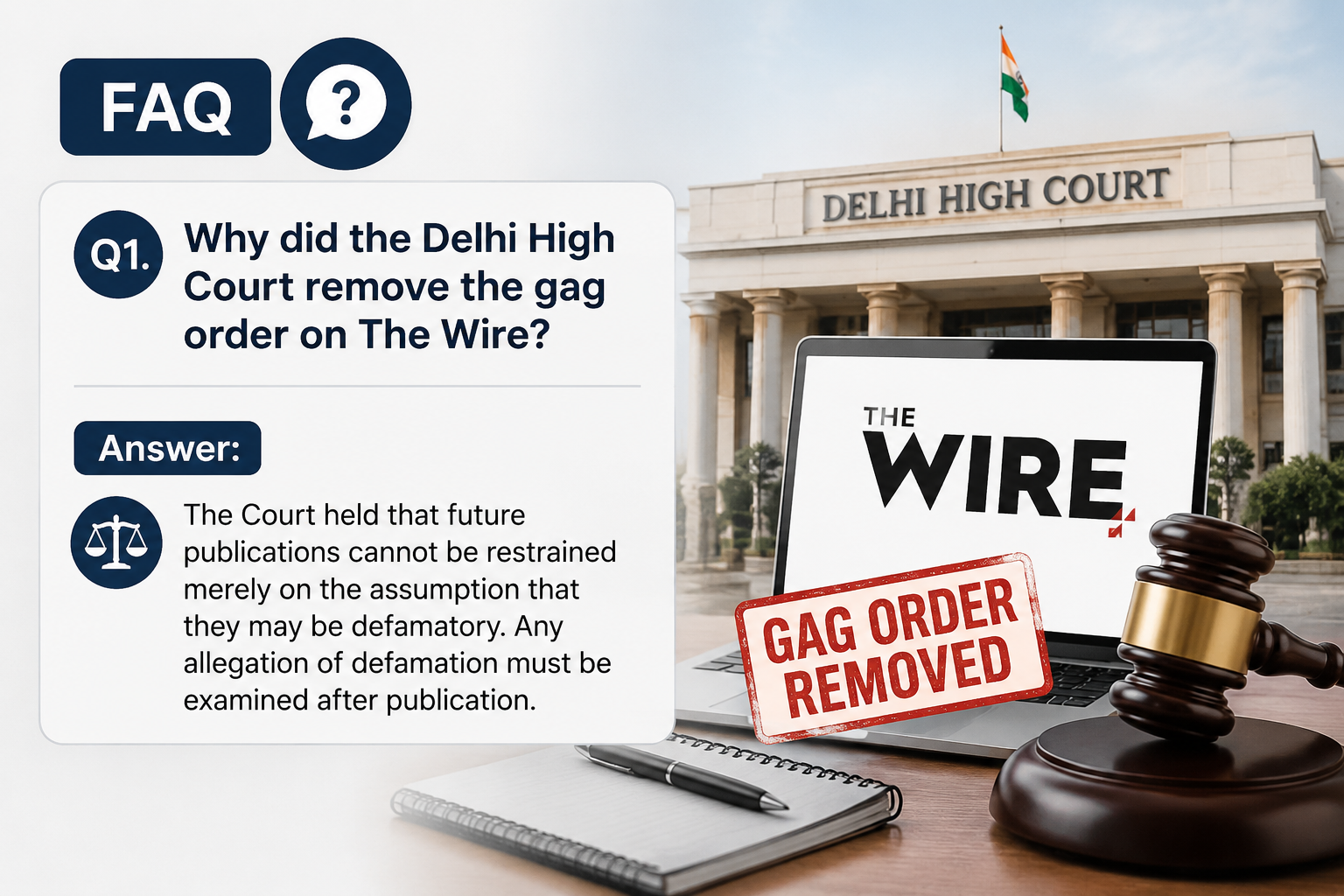
A gag order is a judicial direction restricting a person or media organization from publishing or disclosing certain information.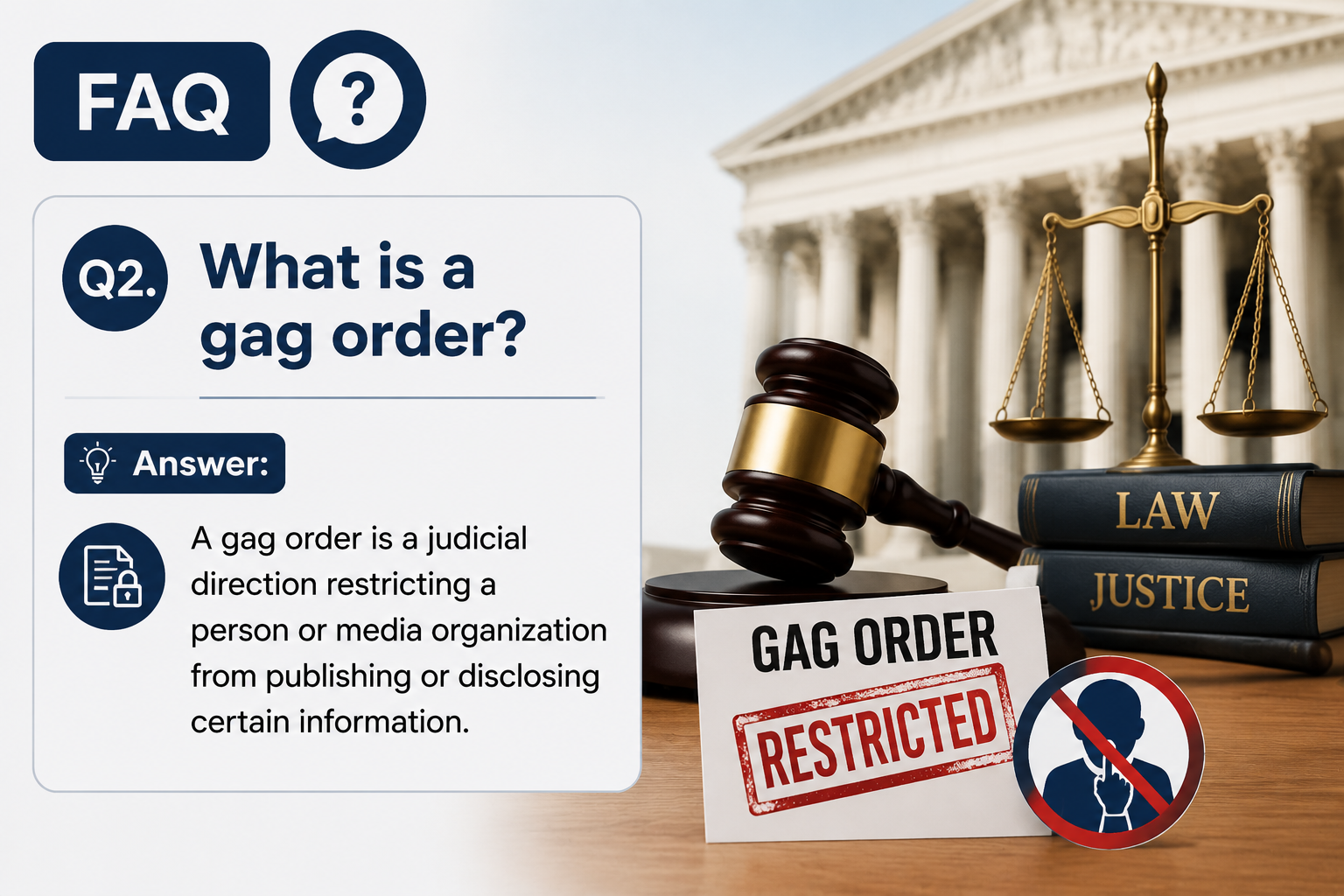
The Court emphasized Article 19(1)(a) of the Constitution of India, which guarantees the fundamental right to freedom of speech and expression.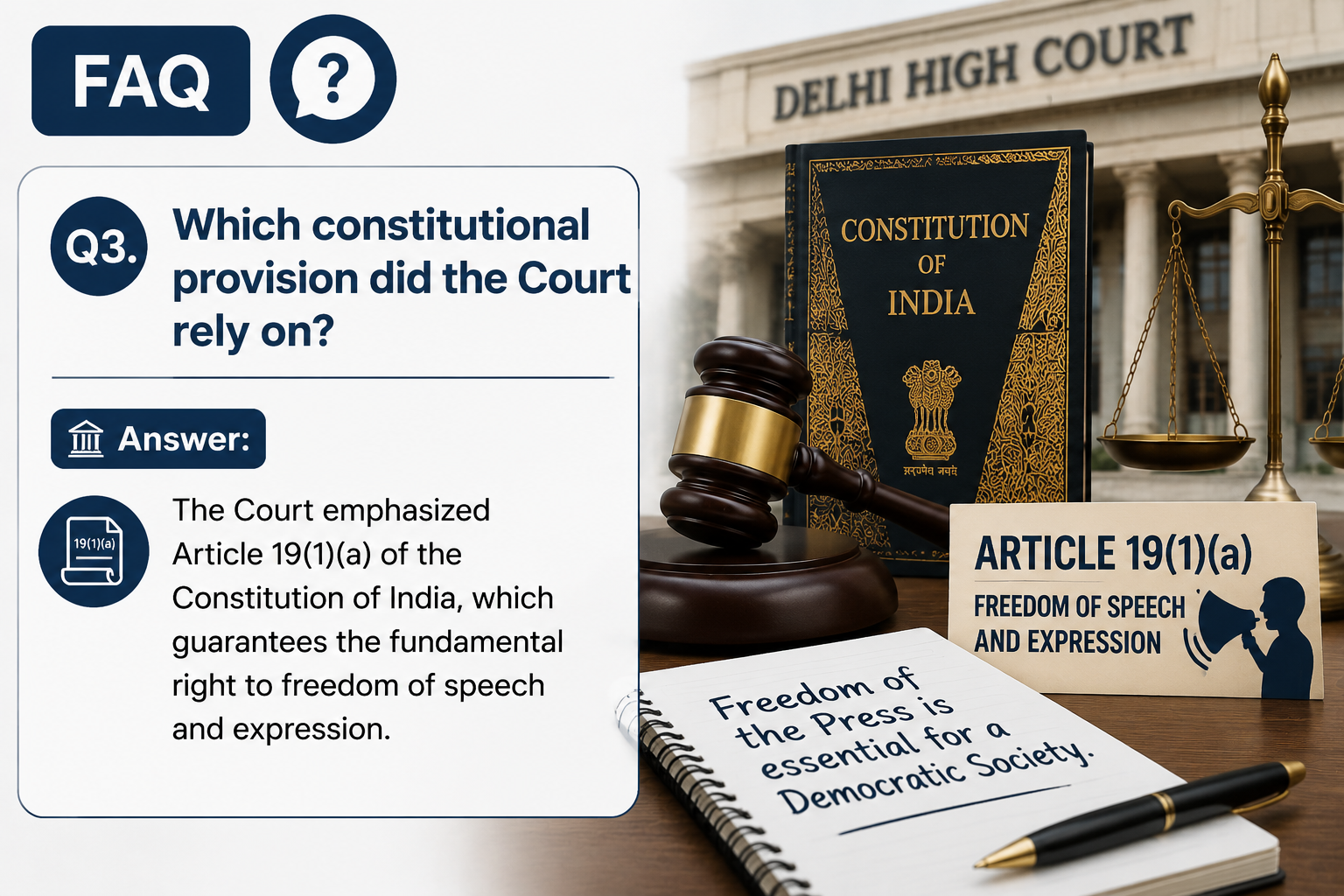
The Delhi High Court observed that prior restraints on future publications should be imposed only in exceptional cases supported by strong legal justification.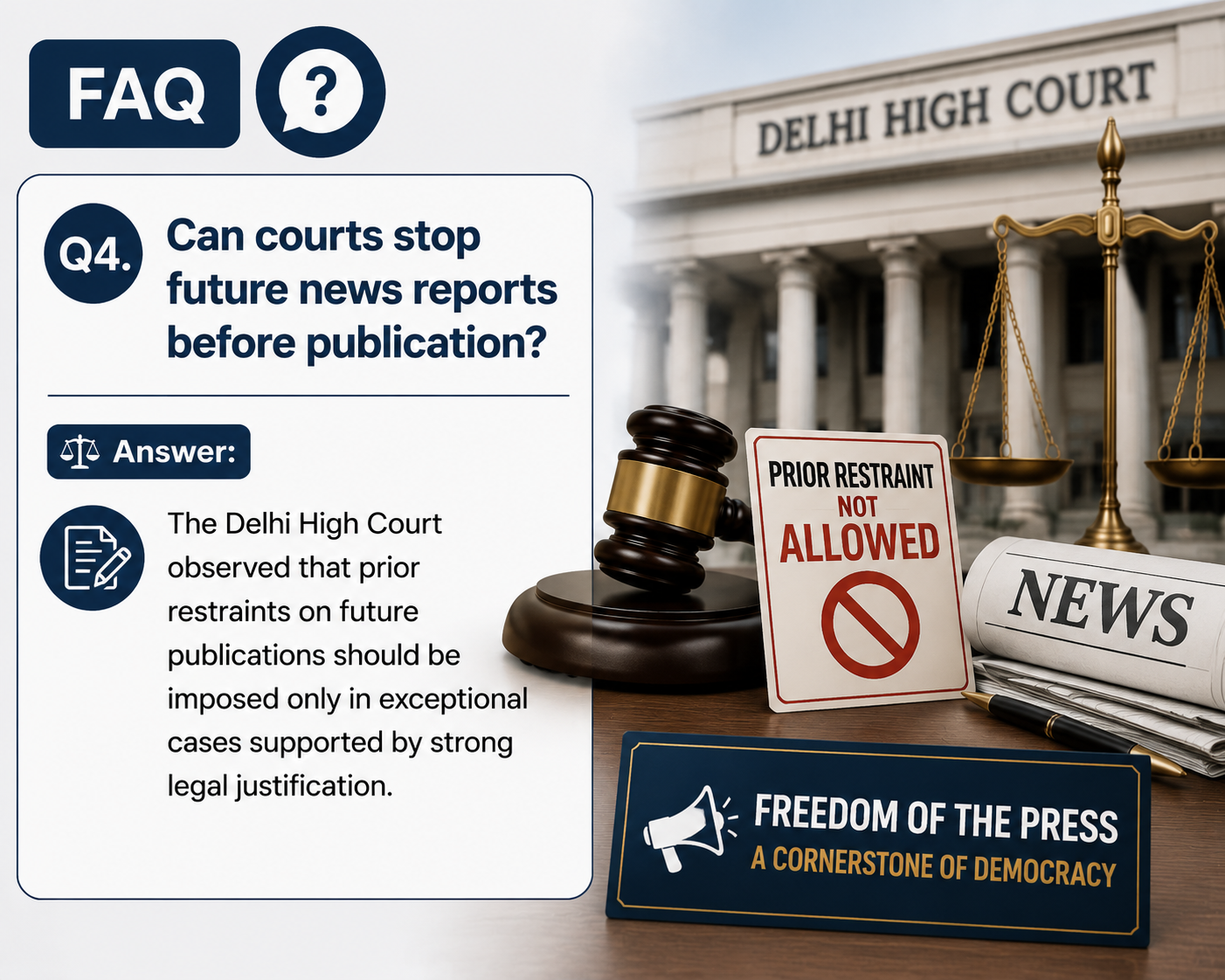
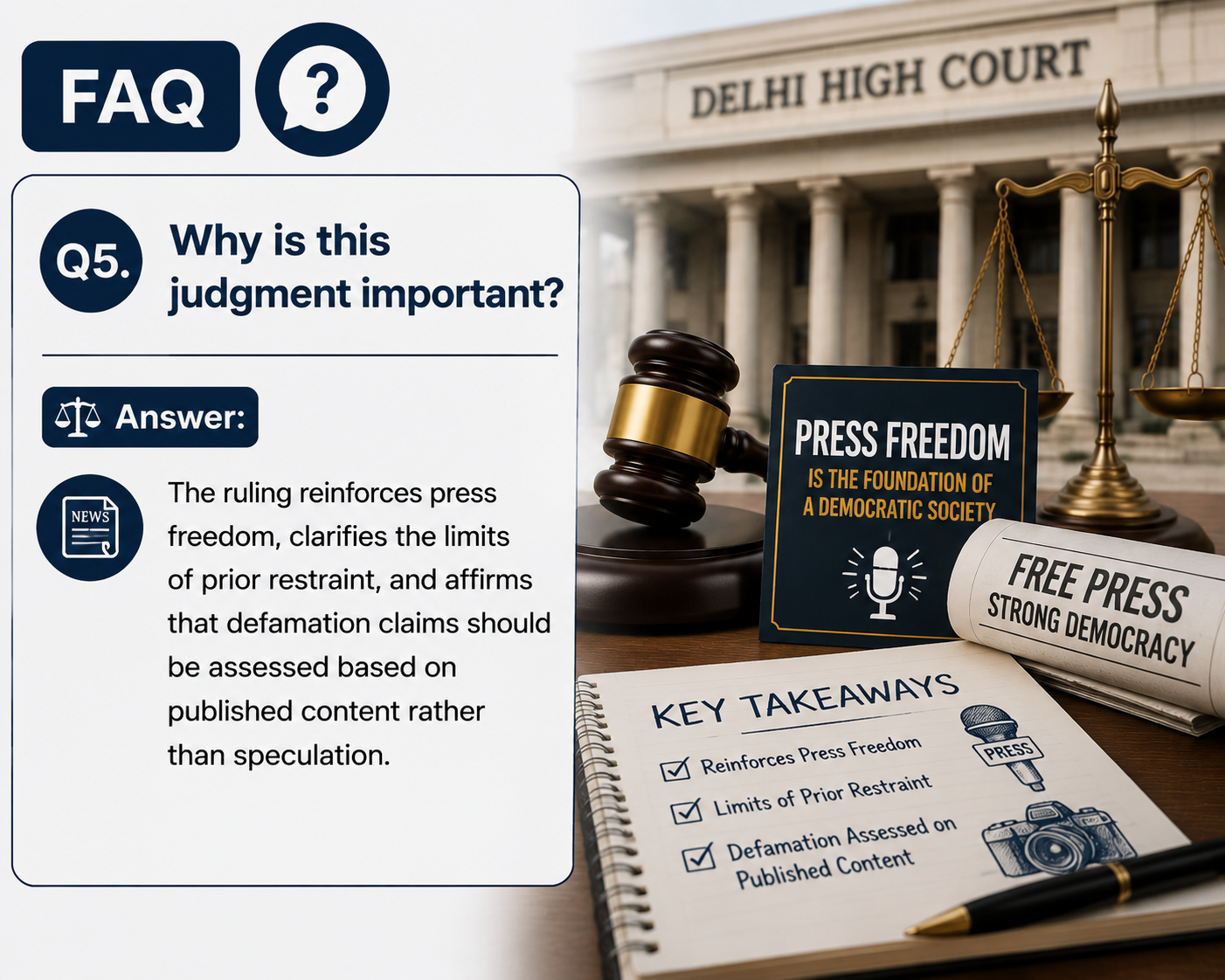
The ruling reinforces press freedom, clarifies the limits of prior restraint, and affirms that defamation claims should be assessed based on published content rather than speculation.