Introduction
The legal profession has always stood apart from other professions. It is built not on commercial success but on public trust, ethical responsibility, and the duty to uphold justice. Every advocate is not merely a service provider but an officer of the court, expected to maintain the highest standards of integrity and professionalism.
However, the way lawyers interact with the public has changed dramatically in recent years. Social media platforms such as LinkedIn, Instagram, YouTube, Facebook, and X (formerly Twitter) have become powerful tools for sharing legal knowledge, discussing landmark judgments, and spreading awareness about citizens’ legal rights. At the same time, these platforms have also created new ethical challenges. Promotional legal videos, client testimonials, paid advertisements, AI-generated legal advice, and online client solicitation have become increasingly common, raising concerns about whether the legal profession is gradually being commercialized.
To address these concerns, the Bar Council of India (BCI) has introduced stricter social media guidelines for advocates. The objective is not to discourage lawyers from using technology but to ensure that digital engagement remains consistent with the ethical standards laid down under the Advocates Act, 1961 and the Bar Council of India Rules. These guidelines remind advocates that professional responsibilities do not end outside the courtroom—they continue in every online interaction.
Why Are These Guidelines Important?
Technology has made legal information more accessible than ever before. A simple search on YouTube or Instagram can produce thousands of videos explaining legal procedures, court judgments, or citizens’ rights. While this has undoubtedly improved legal awareness, it has also blurred the distinction between educating the public and advertising legal services.
In recent years, many lawyers and legal influencers have started creating content that focuses less on legal education and more on attracting potential clients. Videos promising guaranteed victories, advertisements claiming to be the “best lawyer,” and paid promotional campaigns have become increasingly visible online. Such practices are inconsistent with the ethical principles governing the legal profession.
The Bar Council of India has therefore clarified that while advocates are encouraged to contribute to legal awareness, they must avoid using digital platforms as a means of soliciting professional work.
Promotional Videos: Where Should Lawyers Draw the Line?
Social media has become one of the easiest ways to reach a large audience. Many advocates now produce videos explaining legal rights, discussing recent court decisions, or answering common legal questions. Such educational content can play a valuable role in improving public understanding of the law.
However, problems arise when educational content turns into self-promotion.
An advocate should never create content that directly or indirectly encourages viewers to hire them. Statements such as “I guarantee success in your case,” “India’s No. 1 Criminal Lawyer,” or “Win your property dispute by contacting me today” are not only misleading but also contrary to the ethical standards prescribed by the Bar Council of India.
Similarly, publishing client testimonials, displaying luxury lifestyles to suggest professional superiority, comparing oneself with other lawyers, or paying influencers to recommend legal services can amount to indirect advertising, which remains prohibited under Rule 36 of the Bar Council of India Rules.
On the other hand, lawyers are free to publish educational videos discussing constitutional rights, explaining recent legislation, analysing Supreme Court judgments, or providing general legal awareness. The key distinction lies in the purpose of the content. If the objective is to educate society, it is permissible. If the objective is to attract clients, it may violate professional ethics.
Artificial Intelligence: A Useful Tool, Not a Substitute for Professional Judgment
Artificial Intelligence has rapidly entered the legal profession. Today, lawyers use AI to summarize judgments, draft contracts, conduct legal research, and prepare articles within minutes. While these tools can significantly improve efficiency, they also present serious ethical responsibilities.
AI-generated legal content should never be published without careful review. Artificial intelligence can produce outdated legal provisions, incorrect case citations, or inaccurate legal interpretations. If an advocate relies solely on AI without verifying the information, the consequences may affect both the client and the lawyer’s professional reputation.
Ultimately, responsibility for every legal opinion rests with the advocate—not with the technology used to prepare it.
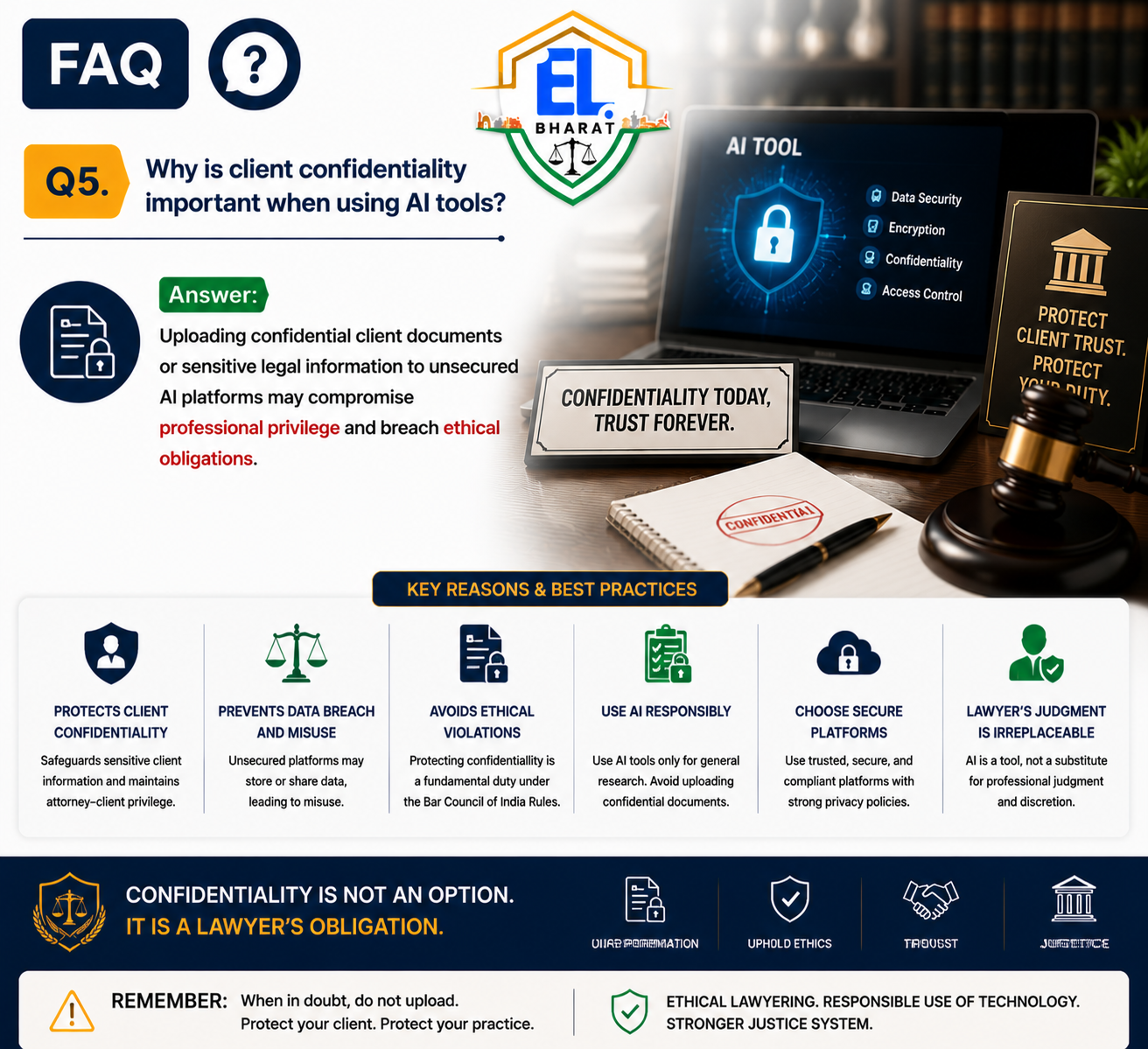
Perhaps the greatest concern relates to client confidentiality. Uploading client documents, agreements, pleadings, litigation strategies, or confidential communications to unsecured AI platforms may compromise privileged information. Such disclosures may violate professional obligations as well as applicable data protection laws.
AI should therefore be viewed as an assistant rather than a replacement for legal expertise. Professional judgment, independent verification, and ethical responsibility must always remain with the advocate.
Digital Client Solicitation Remains Prohibited
One of the fundamental principles governing the legal profession is that advocates cannot advertise or solicit legal work. This principle applies equally in the digital environment.
Modern forms of solicitation include sending unsolicited direct messages offering legal services, running paid advertisements on social media, purchasing sponsored posts, contacting accident victims immediately after incidents, or offering free consultations solely to attract clients.
Although these practices may be common in commercial industries, they are inconsistent with the ethical standards applicable to advocates. Legal services cannot be marketed in the same way as ordinary products or businesses.
This does not mean that lawyers cannot maintain an online presence. The Bar Council of India continues to permit advocates to maintain professional websites or online profiles containing factual information such as their qualifications, enrolment details, areas of practice, office address, publications, and contact information. The information should remain informative rather than promotional.
Maintaining Professionalism on Social Media
Every post, comment, or video shared by an advocate reflects not only on the individual lawyer but also on the legal profession as a whole. For this reason, professional ethics extend beyond courtrooms and law offices into the digital world.
Advocates should avoid discussing confidential client matters, sharing photographs or videos of court proceedings without permission, recording meetings with clients, revealing litigation strategies, or making disrespectful remarks about judges, opposing counsel, or pending cases.
Lawyers should also be cautious when commenting on ongoing judicial proceedings, as irresponsible statements may undermine public confidence in the administration of justice or prejudice pending matters.
Maintaining courtesy, accuracy, and confidentiality online is just as important as maintaining them during courtroom proceedings.
Balancing Legal Education and Professional Ethics
The Bar Council of India’s updated guidelines do not discourage lawyers from embracing technology. Instead, they encourage advocates to use digital platforms responsibly.
Social media can be an effective medium for explaining legal rights, simplifying complex legislation, promoting constitutional values, and increasing public legal awareness. When used ethically, it strengthens access to justice and improves legal literacy among citizens.
However, the profession loses its dignity when digital platforms are used primarily for self-promotion, commercial advertising, or misleading claims. Advocates must remember that credibility is built through competence, integrity, and ethical conduct—not through aggressive marketing strategies.
Conclusion
The legal profession is founded on trust, independence, and a commitment to justice. While technology has transformed the way lawyers communicate with the public, it has not changed the ethical principles that govern advocacy. The Bar Council of India’s updated social media guidelines serve as a timely reminder that every advocate carries professional responsibilities in both physical and digital spaces.
Lawyers should view social media as a platform to educate, inform, and contribute to meaningful legal discussions rather than as a marketplace for acquiring clients. Artificial Intelligence should be embraced as a supportive tool but never relied upon without careful verification or at the cost of client confidentiality.
As the legal profession continues to evolve in the digital age, advocates who combine technological innovation with ethical discipline will not only comply with professional standards but also strengthen public confidence in the justice delivery system. Responsible digital conduct is no longer optional—it is an essential part of modern legal practice.
No. Under the Bar Council of India Rules, advocates cannot directly or indirectly advertise or solicit professional work through social media or other platforms.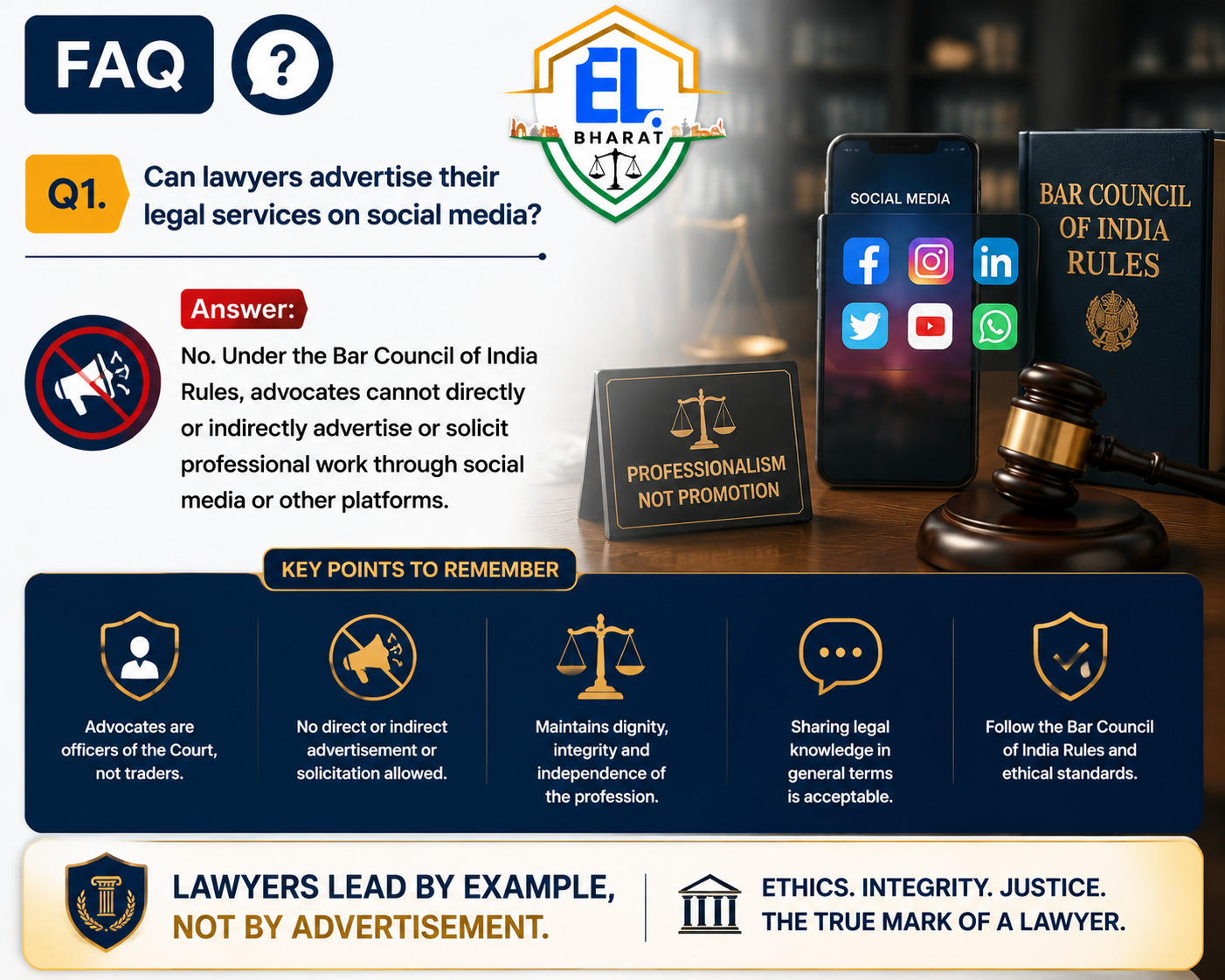
Yes. Lawyers may publish educational content explaining legal rights, court judgments, or legal procedures, provided it is informative and not intended to attract clients.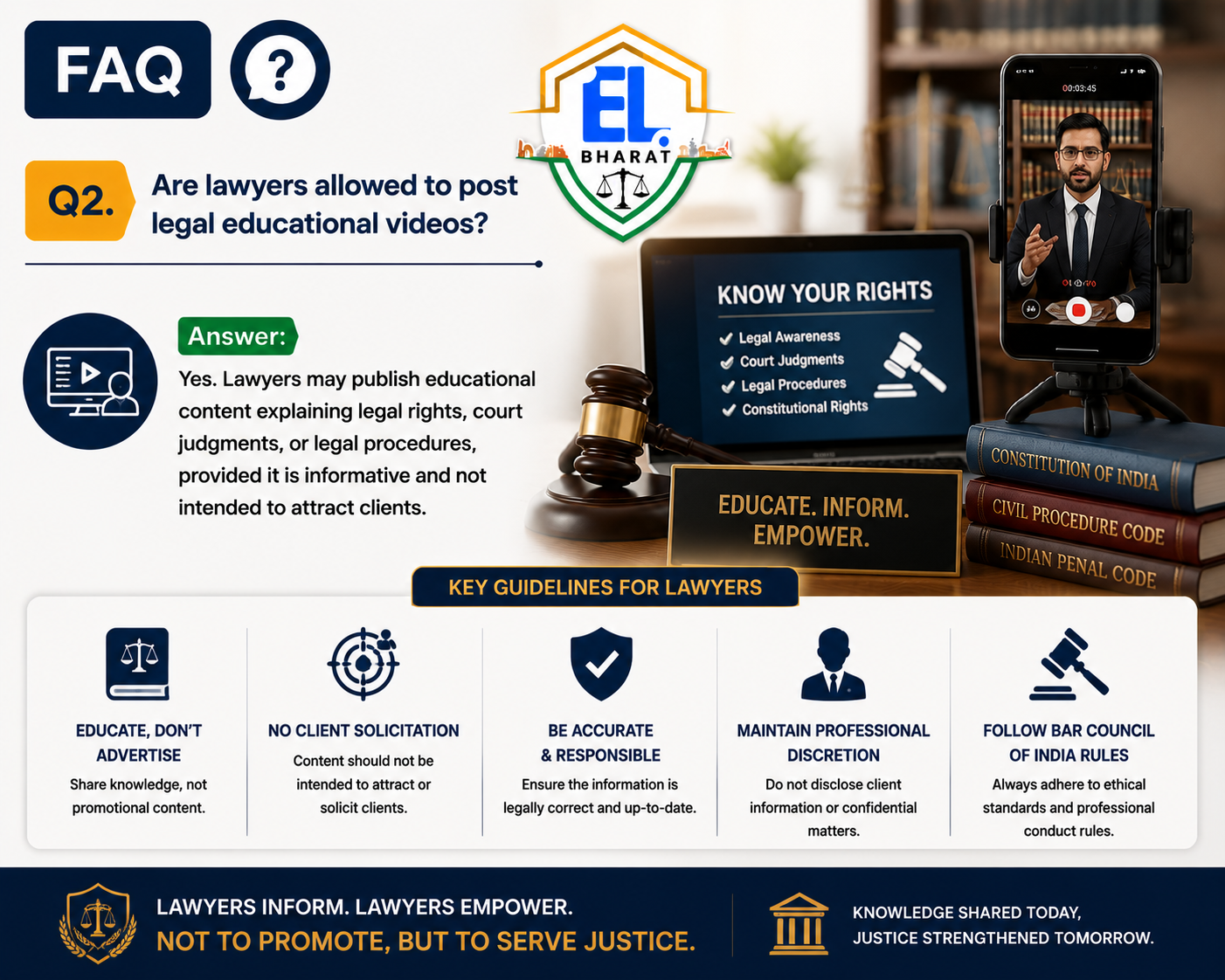
Yes. AI may be used as an assistance tool, but advocates must independently verify all AI-generated content before publication and remain responsible for its accuracy.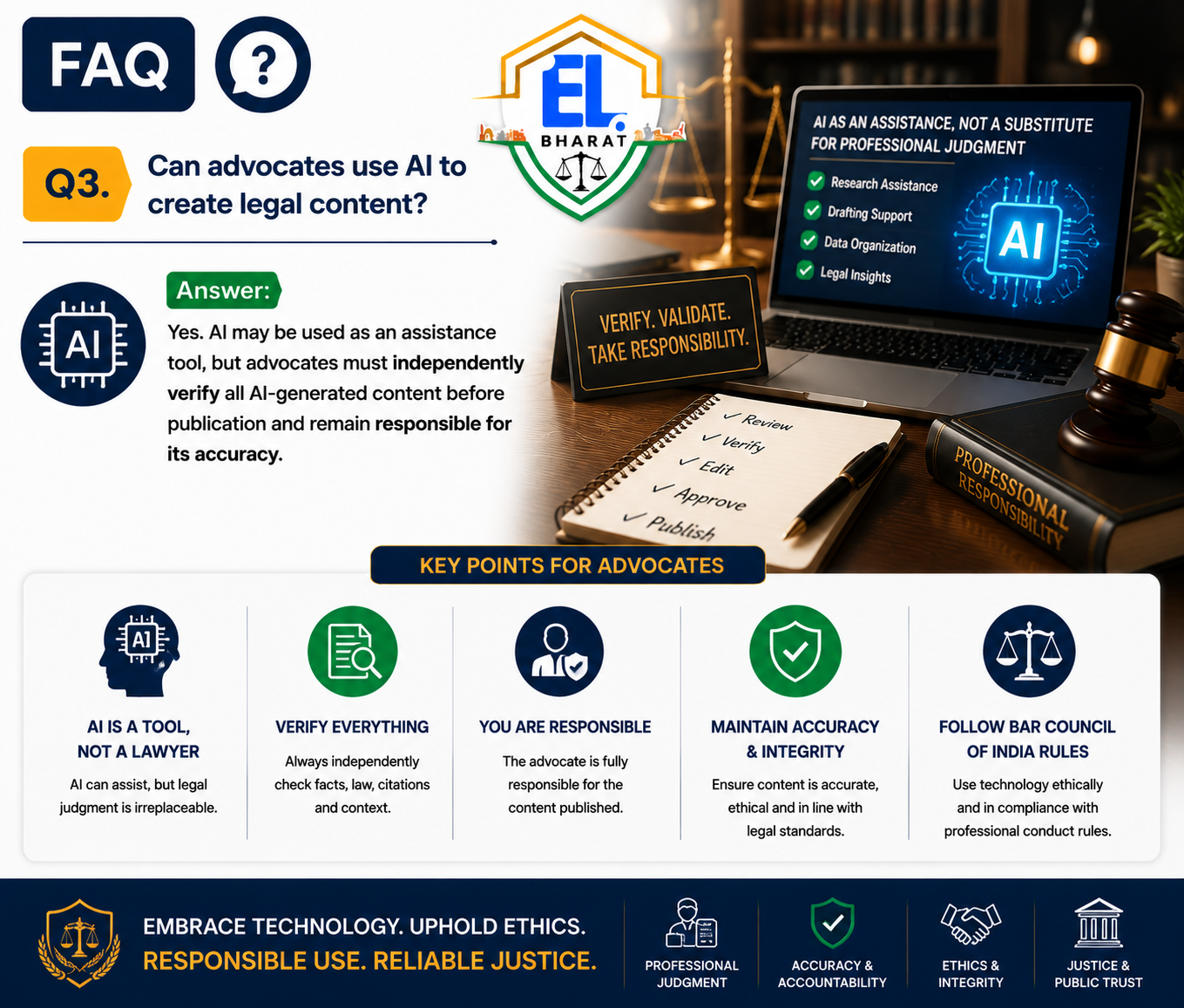
No. Publishing client testimonials or promotional endorsements may amount to indirect advertising and may violate Rule 36 of the Bar Council of India Rules.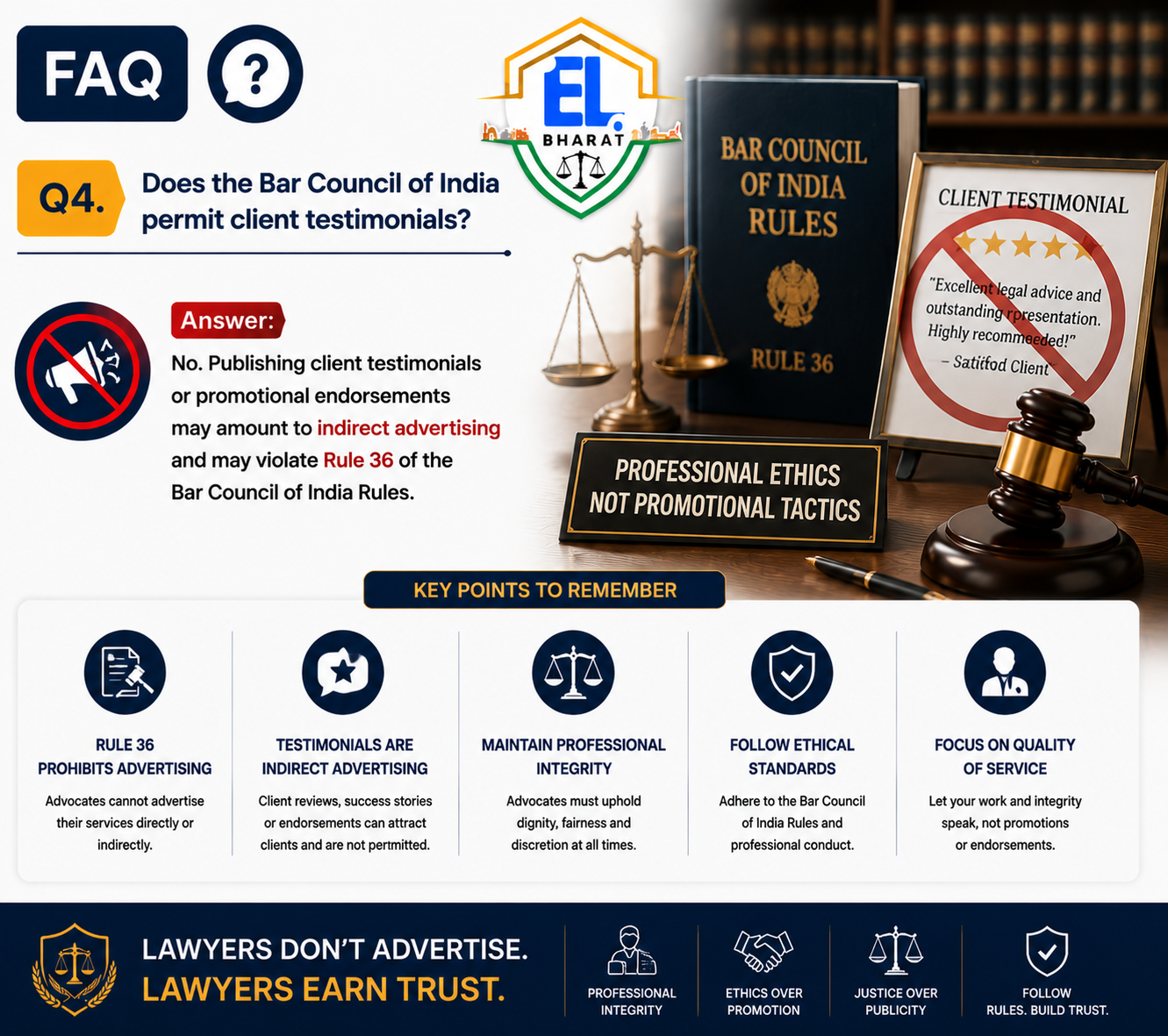
Uploading confidential client documents or sensitive legal information to unsecured AI platforms may compromise professional privilege and breach ethical obligations.